Preserving the Cold Chain: A Comprehensive Guide to HACCP Maintenance in Cold Storage
By. Sofie Thoriq - 20 Feb 2026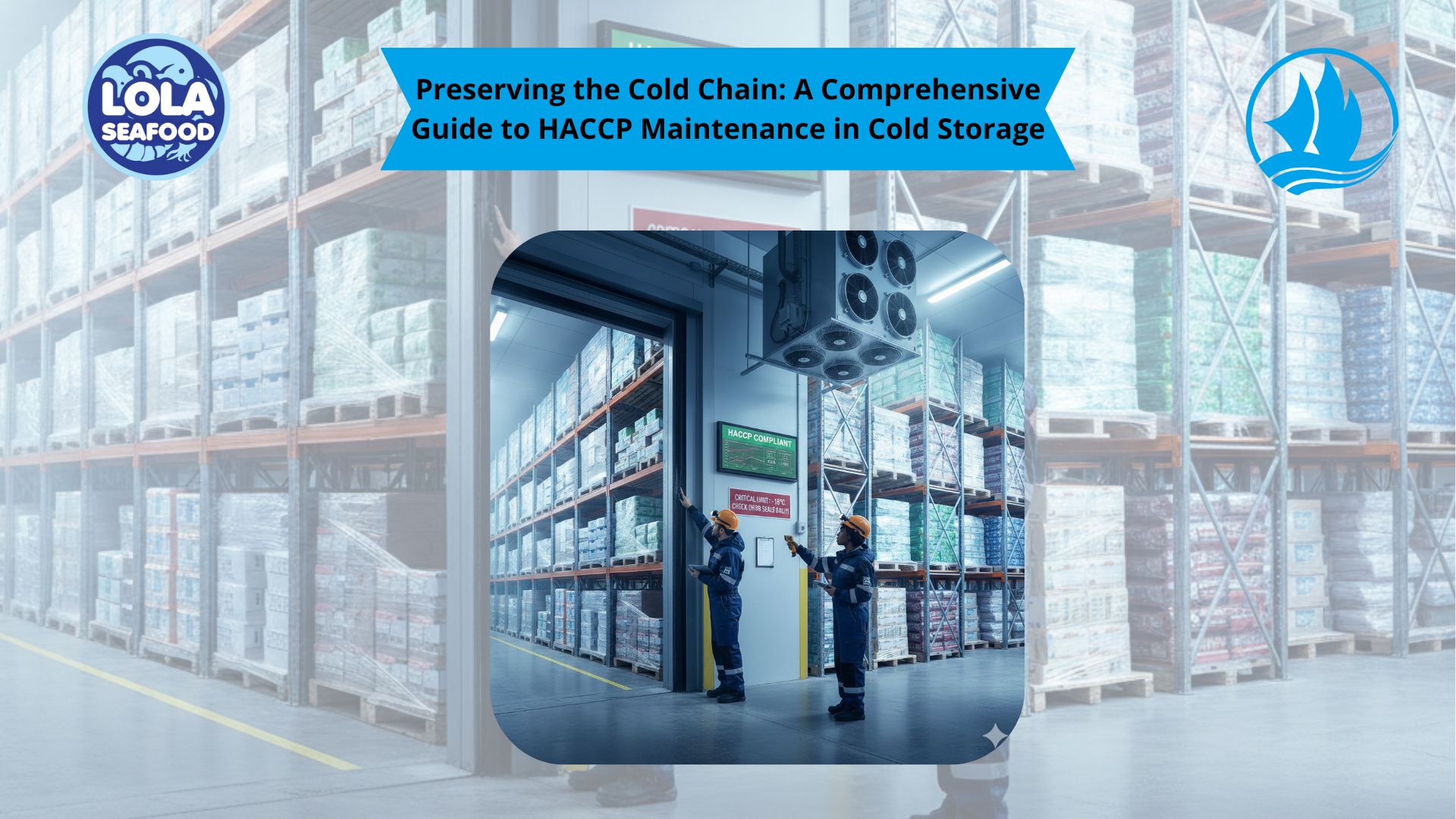
kelolalaut.com In the global food and pharmaceutical industries, cold storage is not merely a utility; it is the fundamental infrastructure that stands between product safety and public health crises. However, even the most advanced refrigeration technology is fallible. To ensure that temperature-sensitive goods remain uncompromised, facilities must integrate the Hazard Analysis Critical Control Point (HACCP) system into their maintenance protocols.
Integrating HACCP into cold storage maintenance shifts the operational mindset from a reactive "fix-it-when-it-breaks" approach to a rigorous, preventive strategy.
Understanding the HACCP Framework in Cold Storage
HACCP is a systematic preventive approach to food safety that identifies biological, chemical, and physical hazards in production processes. In the context of cold storage, the primary hazard is temperature abuse, which leads to the rapid proliferation of pathogens like Listeria monocytogenes or Salmonella.
A robust HACCP maintenance plan focuses on ensuring that the equipment—compressors, evaporators, seals, and sensors—consistently performs within defined safety parameters.
The 7 Principles of HACCP Applied to Maintenance
1. Hazard Analysis
The maintenance team must identify where the cold chain is most likely to fail. Common hazards include:
- Biological: Bacterial growth due to fluctuating temperatures.
- Physical: Ice buildup on ceilings falling into products, or oil leaks from cooling fans.
- Chemical: Refrigerant leaks contaminating stored goods.
2. Determine Critical Control Points (CCPs)
In cold storage, the most vital CCP is the Internal Air Temperature. Another often-overlooked CCP is the integrity of the thermal envelope (the walls and doors that keep the cold in).
3. Establish Critical Limits
Critical limits must be science-based and strictly observed. For instance, if a facility stores frozen seafood, the critical limit might be set at -18°C. Any deviation above this threshold for a specific duration constitutes a breach of safety protocols.
4. Establish Monitoring Procedures
Maintenance isn't just about repairing; it’s about observing. Automated monitoring systems should be installed to provide 24/7 data. Manual "spot checks" by technicians serve as a secondary verification to ensure the automated sensors haven't drifted.
5. Establish Corrective Actions
When a critical limit is breached—for example, a compressor failure causes temperatures to rise to 0°C—the HACCP plan must dictate immediate steps:
- Move products to a backup cold room.
- Notify the Quality Assurance (QA) manager.
- Evaluate the product for safety before releasing it.
6. Establish Verification Procedures
Verification ensures the HACCP system is working. This includes the annual calibration of all thermometers and sensors. It also involves reviewing maintenance logs to ensure that preventive tasks, like cleaning condenser coils, are actually being performed.
7. Establish Record-Keeping
In the eyes of auditors, "if it isn't written down, it didn't happen." A comprehensive log must include:
- Daily temperature logs.
- Equipment service history.
- Calibration certificates.
- Records of corrective actions taken during failures.
The Pillar of Preventive Maintenance
The success of HACCP depends heavily on the Preventive Maintenance (PM) schedule. A well-maintained machine rarely crosses a critical limit unexpectedly.
Key Maintenance Tasks:
- Evaporator Care: Ice buildup on evaporator coils acts as an insulator, reducing cooling efficiency. Regular defrost cycles must be monitored for timing and efficacy.
- Gasket and Seal Integrity: Door gaskets are the most common point of failure. A torn gasket allows moist, warm air to enter, causing "snowing" and temperature spikes.
- Refrigerant Levels: Low refrigerant levels force compressors to run longer, increasing the risk of mechanical burnout and inconsistent cooling.
The Role of Technology: IoT and Predictive Maintenance
The future of HACCP maintenance lies in Internet of Things (IoT) sensors and Artificial Intelligence. Modern cold storage facilities use predictive maintenance, where sensors detect vibrations in a motor or a slight increase in energy consumption before a breakdown occurs. This allows technicians to intervene during scheduled downtime rather than reacting to an emergency alarm at 3:00 AM.
If youre interested in our Whiting Fish Whole Round,Barramundi Fillet Skin On,Catfish Fillet Skinless,Cobia Fillet Skinless,Coral Trout Fillet Skin On,Barramundi Whole Round / Whole Gilled Gutted Scaled,Corvina / Croaker / Jew Fish Whole Round / Whole Gilled Gutted Scaled,Black Pomfret Whole Round,Red / Scarlet Snapper Fillet Portion,Parrotfish Fillet Skinless,Baby Octopus Flower please do not hesitate to contact us through email and/or Whatsapp