Eco-Labeling: Safeguarding Sustainability While Boosting the Market Value of Pelagic Fish
By. Lutfi - 03 Mar 2026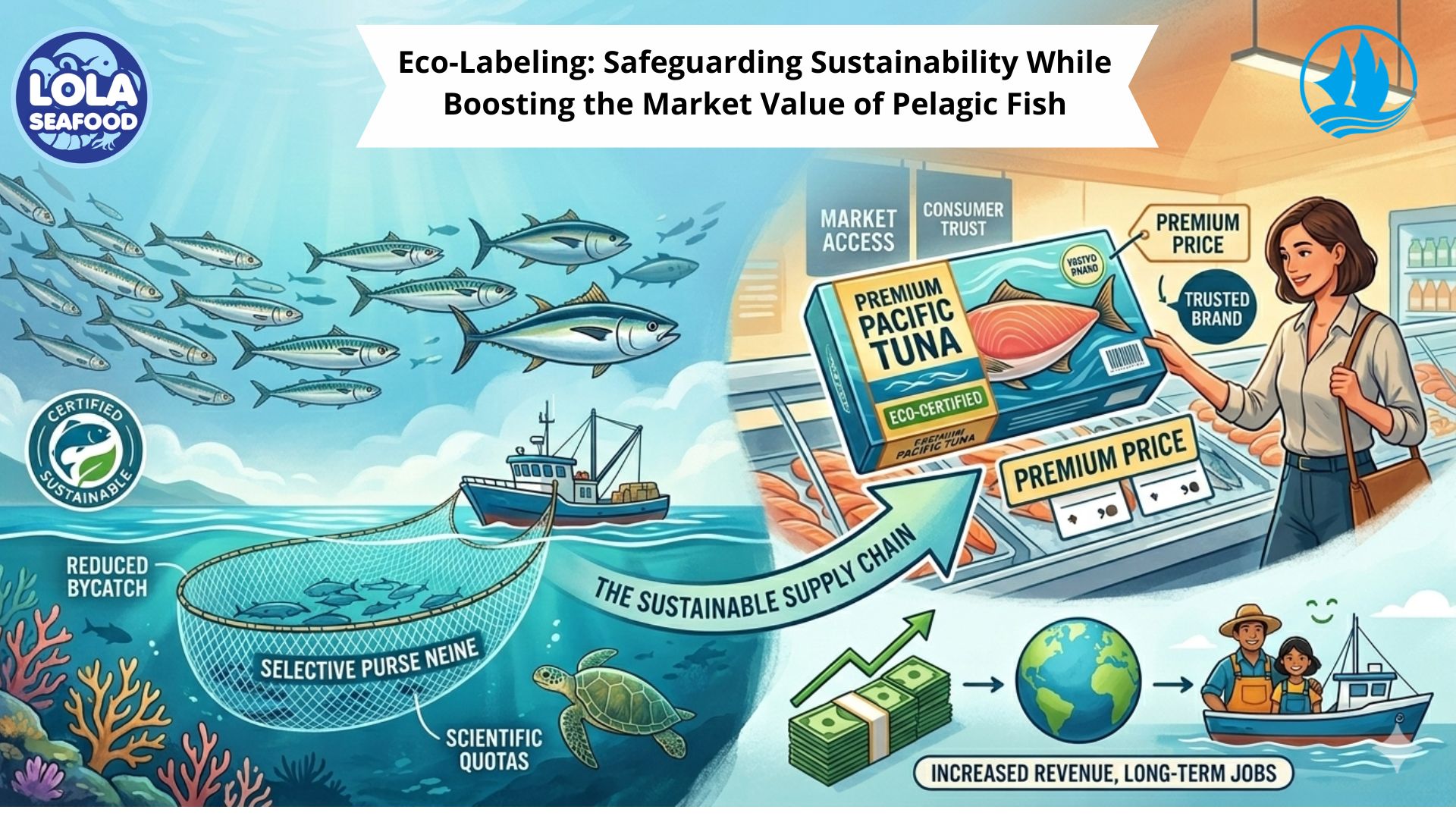
kelolalaut.com The global demand for seafood has never been higher, yet our oceans are facing unprecedented pressure. Among the most vital components of marine ecosystems—and global food security—are pelagic fish. These species, ranging from small forage fish like sardines and mackerel to large predators like tuna and swordfish, live in the open ocean and represent a significant portion of the global catch.
However, as overfishing and habitat degradation threaten these stocks, a powerful tool has emerged to bridge the gap between conservation and commerce: Eco-labeling.
Understanding the Pelagic Paradox
Pelagic fish are the "engines" of the ocean. They are highly migratory, often crossing international borders, which makes them notoriously difficult to manage. Because they school in massive numbers, they are easy targets for industrial-scale fishing.
The paradox lies in their value. While they are essential for the survival of marine mammals and seabirds, they are also a primary source of protein and Omega-3 for billions of people. Without intervention, the race for "blue gold" often leads to a "tragedy of the commons." This is where eco-labeling steps in, transforming the way we value the fish on our plates.
What is Eco-Labeling?
Eco-labeling is a voluntary method of environmental performance certification and labeling. In the context of fisheries, a label—such as the Marine Stewardship Council (MSC) or Friend of the Sea—on a product indicates that the fish was caught using sustainable methods.
To earn these labels, fisheries must prove they meet three main criteria:
- Sustainable Fish Stocks: Fishing must be at a level that ensures it can continue indefinitely.
- Minimizing Environmental Impact: Fishing operations must be managed to maintain the structure, productivity, and diversity of the ecosystem (e.g., reducing bycatch of turtles or dolphins).
- Effective Management: The fishery must comply with relevant laws and have a system to respond to changing environmental conditions.
Boosting Market Value: The Economic Incentive
While the primary goal of eco-labeling is conservation, the economic benefits are the "hook" for the industry. Eco-labeling increases the market value of pelagic fish through several key mechanisms:
1. Access to Premium Markets
Modern consumers, particularly in Europe, North America, and parts of Asia, are increasingly "eco-conscious." Major retailers like Walmart, Costco, and Carrefour have pledged to source only certified sustainable seafood. For a pelagic fishery, obtaining an eco-label is a "passport" to these high-value markets that would otherwise be closed.
2. Price Premiums
Studies have shown that consumers are often willing to pay a premium—ranging from 10% to 25%—for seafood that carries a trusted sustainability mark. This "green premium" flows back through the supply chain, providing better margins for fishers who invest in sustainable gear and practices.
3. Brand Reputation and Risk Mitigation
In the age of social media, a single report of "unsustainable" or "illegal" fishing can devastate a brand. Eco-labeling acts as a form of insurance. It provides a third-party verification that shields companies from reputational damage and ensures long-term supply stability.
The Environmental Dividend
Beyond the dollar signs, the impact on the water is profound. Eco-labeling encourages pelagic fisheries to innovate. For instance, many tuna fisheries have switched to one-by-one fishing (pole and line) or improved their Fish Aggregating Devices (FADs) to reduce the accidental capture of non-target species.
By keeping pelagic stocks healthy, we maintain the ocean's carbon sequestration capabilities. Pelagic fish play a role in the "biological pump," moving nutrients through the water column, which helps the ocean regulate the global climate.
Challenges on the Horizon
It isn’t all smooth sailing. The cost of certification can be prohibitive for small-scale fishers in developing nations. There are also concerns regarding "greenwashing," where labels might not be as rigorous as they claim. However, as technology improves—using blockchain for traceability and satellite monitoring for fishing fleets—the integrity of eco-labels is becoming harder to fake.
A Win-Win for Blue Economy
Eco-labeling proves that environmental protection and economic profitability are not mutually exclusive; they are, in fact, symbiotic. For pelagic fish, which represent the wild frontier of our food system, these labels provide a roadmap for survival.
By choosing certified products, consumers send a clear message to the markets: we value the ocean’s future as much as our dinner. In the end, protecting the pelagic "commons" ensures that the fishing industry remains a viable, profitable, and respected pillar of the global economy for generations to come.
If youre interested in our Bonito Fillet Loin , Bonito Fillet Portion Cut, Bonito Whole Round,Catfish Fillet Skinless, Catfish Steak, Catfish Whole Round / Whole Gilled Gutted,Cobia Fillet Skin On,Cobia Fillet Skinless, Cobia Whole Round / Whole Gilled Gutted please do not hesitate to contact us through email and/or Whatsapp

.jpg)
.jpg)