The Art of Preservation: The Critical Role of Glazing in the Fish Processing Industry
By. Puji Widyastuti - 06 Mar 2026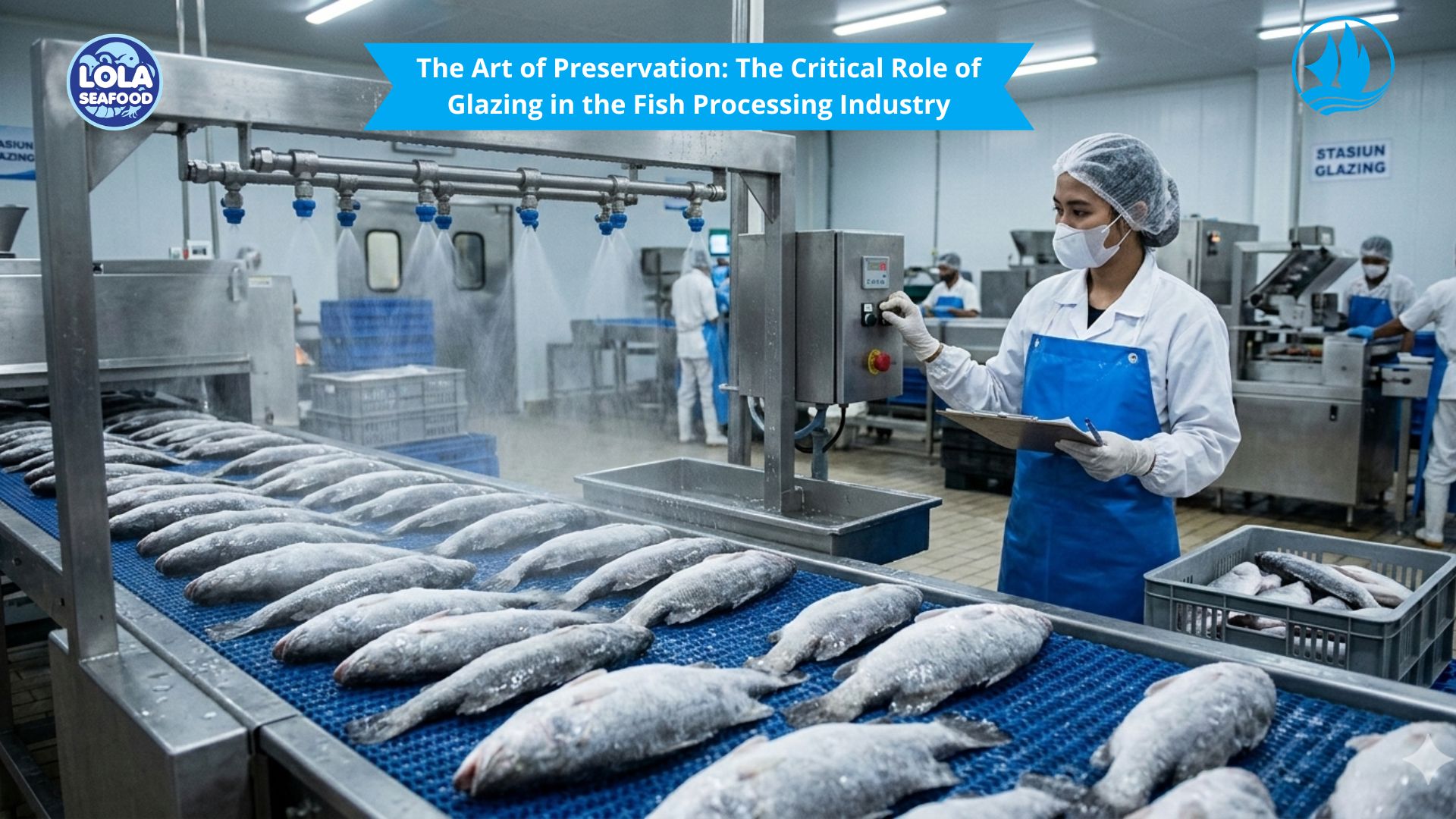
kelolalaut.com In the global seafood trade, maintaining the "just-caught" quality of fish from the ocean to the dinner plate is a sophisticated logistical challenge. Among the various preservation techniques employed by the industry, glazing stands out as one of the most essential yet often overlooked processes. This method involves applying a thin, protective layer of ice to the surface of a frozen seafood product, acting as a sacrificial barrier against the harsh environment of cold storage.
What is Glazing?
At its core, glazing is the process of coating frozen fish with a film of water that quickly freezes into a clear, solid ice shell. This is typically achieved by either dipping the frozen product into a chilled water bath or spraying it with a fine mist of water.
While it might seem counterintuitive to add weight to a product, the primary goal of glazing isn't to increase bulk—it's to prevent sublimation. Sublimation occurs when ice crystals on the surface of the fish turn directly into water vapor without melting, leading to the dreaded phenomenon known as freezer burn.
The Science Behind the Shield
When fish is stored in industrial freezers, the air is often extremely dry and subject to temperature fluctuations. Without a glaze, the moisture within the fish tissues migrates to the surface and evaporates. This results in:
- Dehydration: The flesh becomes tough, fibrous, and unappealing.
- Oxidation: Exposure to oxygen causes fats in the fish to turn rancid, altering the flavor and smell.
- Discoloration: The vibrant colors of species like salmon or tuna fade into dull greys or browns.
By applying a glaze, the environmental "attack" is directed at the ice layer rather than the fish itself. The ice glaze evaporates over time, leaving the underlying tissue moist and protected.
Methods of Application
The fish processing industry generally utilizes three primary methods to apply a glaze:
- Dipping: Frozen fish are submerged in a tank of water (usually kept at }0oC to 2oC for a few seconds. This method ensures full coverage but can be difficult to control for precise weight gain.
- Spraying: Fish travel on a conveyor belt under a series of nozzles that spray chilled water. This is more hygienic and allows for better integration into automated production lines.
- Vacuum Glazing: A more advanced technique where the pressure is manipulated to ensure the ice layer penetrates every crevice of the product, often used for high-value items like shrimp or scallops.
Enhancing the Glaze: Additives and Innovation
Modern processing has moved beyond simple freshwater glazes. To further extend shelf life, processors often use cryoprotectants or antioxidants within the glazing water. Chemicals like phosphates or citric acid can be added to help the ice adhere better to the fish or to provide an extra chemical barrier against oxidation.
Furthermore, the thickness of the glaze is a critical variable. Usually, a glaze represents 5% to 15% of the total weight of the product. If the glaze is too thin, it will disappear before the fish reaches the consumer; if it is too thick, it can be seen as "economic adulteration," where customers are essentially paying for expensive ice.
The Economic and Regulatory Landscape
Glazing is a point of significant regulatory scrutiny. Because fish is sold by weight, international food standards (such as the Codex Alimentarius) require that the "net weight" declared on the packaging must exclude the weight of the glaze.
For processors, mastering the glazing percentage is a balancing act between quality assurance and cost-efficiency. They must ensure the glaze is robust enough to survive months of international shipping while remaining transparent about the actual seafood content to maintain consumer trust.
Challenges in the Process
Despite its benefits, glazing is not without challenges. If the water used for glazing is not properly chilled, it can slightly "thaw" the surface of the fish, leading to a loss of quality. Additionally, if the fish are not frozen deeply enough before glazing (usually requiring a core temperature of 20oC or lower), the glaze will not bond correctly and may crack or peel off during transport.
If youre interested in our Whiting Fish Whole Round,Barramundi Fillet Skin On,Catfish Fillet Skinless,Cobia Fillet Skinless,Coral Trout Fillet Skin On,Barramundi Whole Round / Whole Gilled Gutted Scaled,Corvina / Croaker / Jew Fish Whole Round / Whole Gilled Gutted Scaled,Black Pomfret Whole Round,Red / Scarlet Snapper Fillet Portion,Parrotfish Fillet Skinless please do not hesitate to contact us through email and/or Whatsapp
.jpg)
.jpg)