Premium Blue Nutrition: Elevating the Market Value of Seafood Through Nutritional Excellence
By. Wiwik Rasmini - 08 May 2026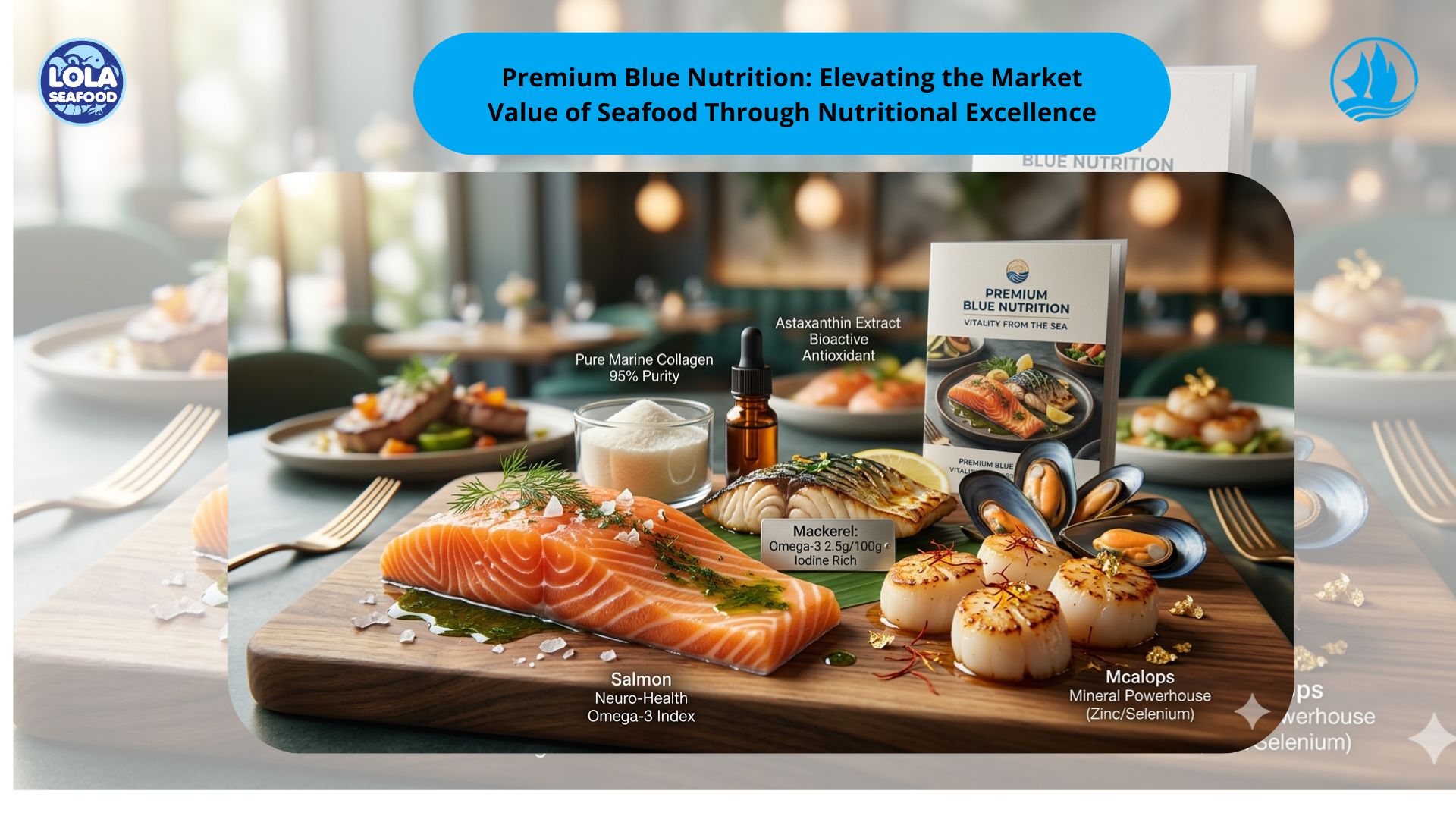
kelolalaut.com In the global marketplace, seafood is undergoing a profound transformation. It is shifting from a generic commodity sold by weight to a high-value functional food sold by its health profile. For producers, exporters, and retailers, the key to increasing "Market Value" lies in narrating the superior nutritional density of marine products. By positioning seafood as a premium wellness solution rather than just a protein source, the industry can unlock significantly higher price points and consumer loyalty.
1. Branding "Bioavailability": The Premium Protein Edge
One of the primary ways to increase the selling price of seafood is to educate the consumer on protein quality. While land-based proteins are often associated with heavy fats and difficult digestion, seafood offers "short-fiber" protein.
- The Digestibility Factor: Seafood proteins are more easily broken down by human enzymes, meaning the body spends less energy on digestion and more on muscle repair.
- Amino Acid Richness: By highlighting that seafood contains a complete profile of essential amino acids—those the body cannot produce—brands can target the high-spending fitness and geriatric wellness demographics who prioritize efficient nutrient uptake.
2. Marketing the "Marine Multi-Mineral"
Seafood should not be marketed as just "fish"; it should be marketed as a natural supplement. The ocean provides a cocktail of minerals that are increasingly rare in depleted terrestrial soils.
- Iodine and Thyroid Health: White fish and shellfish are among the few natural sources of Iodine. In markets where metabolic disorders are rising, "Iodine-Rich" labeling adds immediate value.
- The Zinc and Selenium Shield: By emphasizing the high Zinc content in oysters or the Selenium in tuna, producers can align their products with the "Immune Support" trend that has dominated consumer spending since 2020. This transforms a food item into a proactive health tool.
3. Leveraging the "Omega-3 Index" for Premium Pricing
The presence of DHA and EPA is perhaps the most bankable asset in the seafood industry. To increase market value, the industry must move beyond vague "healthy" claims and toward quantitative nutritional labeling.
- Specific Health Claims: Marketing campaigns that link specific Omega-3 levels to "Heart Protection," "Infant Brain Development," or "Vision Support" allow for premium "Functional Food" status.
- The Mackerel Example: A local fish like mackerel (ikan kembung) can be sold at a higher margin if consumers realize its Omega-3 content rivals or exceeds that of imported salmon. Value is created through the democratization of "Superfoods."
Value-Added Attributes: A Comparative Strategy
|
Product Category |
Traditional Value Prop |
Premium "Blue Nutrition" Value Prop |
|
White Fish |
Low-fat protein |
Easy-to-digest "Lean Bio-Protein" |
|
Shellfish |
Luxury/Taste |
"Mineral Powerhouse" (Zinc/Iron) |
|
Fatty Fish |
Flavorful meat |
"Neuro-Health" (High $DHA$ & $EPA$) |
|
By-products |
Low-value waste |
"Collagen & Bioactive Peptide" Source |
4. Transparency as a Value Multiplier
Modern value is inextricably linked to Traceability. A consumer is willing to pay a 20-30% premium for seafood that comes with a "Digital Birth Certificate."
- Nutritional Integrity: Proving that a fish was caught or farmed in clean, mineral-rich waters ensures that the promised nutrient levels are actually present.
- ESG and Ethical Sourcing: Value increases when a product supports ocean health. Sustainable certification combined with high nutritional density creates a "Guilt-Free Premium" category that land-based industrial farming struggles to match.
5. Innovation: From Raw Material to Bioactive Extracts
To truly maximize market value, the industry is looking toward Nutraceuticals. The highest margins are no longer in the fillet, but in the extracts.
- Marine Collagen: Extracted from fish scales and skin, this is now a multi-billion dollar industry in beauty and joint health.
- Astaxanthin and Peptides: By-products of crustacean processing are being refined into high-value antioxidants. This "zero-waste" nutritional approach ensures that every gram of the harvest contributes to the bottom line.
6. The Aesthetic of Health: Packaging and Presentation
Increasing market value requires a shift in aesthetics. Seafood packaging should reflect the pharmaceutical-grade purity of the product inside. Vacuum-sealed, portion-controlled, and nutritionally-labeled packaging signals to the consumer that they are buying a high-performance fuel for their body.
.jpg)

.jpg)