The Art of Pempek: Crafting Sumatra’s Iconic Fish Cake
By. Monica - 16 May 2026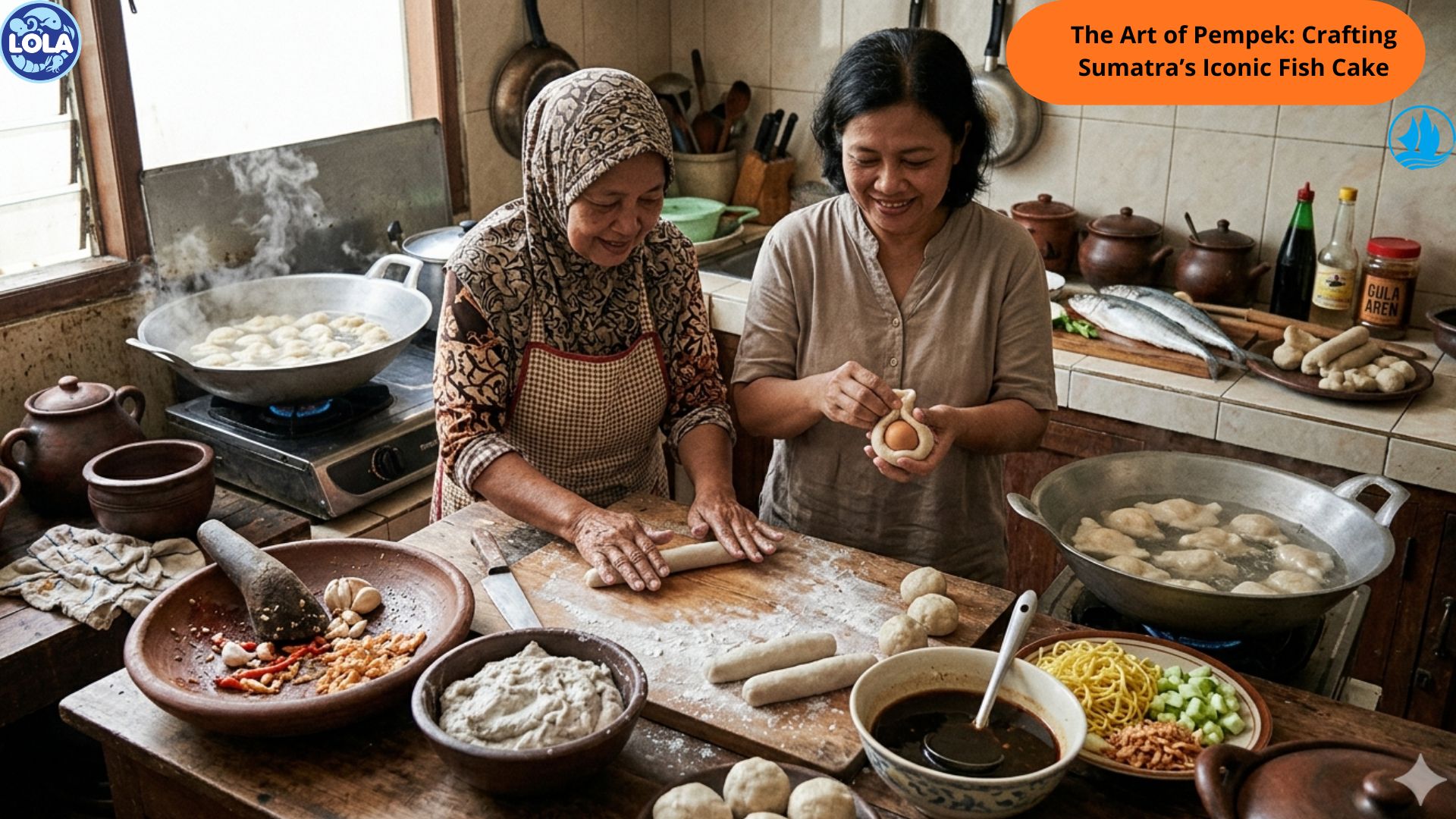
kelolalaut.com If you travel to Palembang, the capital city of South Sumatra, Indonesia, your culinary journey will never be complete without tasting Pempek. This savory, chewy fish cake, served with a rich, sweet, and spicy vinegar-based sauce called cuko, is a masterpiece of Indonesian street food. While it is readily available across the archipelago, the traditional process of making authentic Pempek is an art form passed down through generations. It requires patience, precision, and a deep understanding of how simple ingredients interact to create the perfect texture.
The Foundation: Choosing the Right Fish
The soul of Pempek lies in its primary ingredient: fresh fish. Historically, local fishermen used Ikan Belida (featherback fish) caught from the Musi River. However, because Belida has become rare and protected, modern cooks primarily use Ikan Tenggiri (Spanish mackerel) or Ikan Gabus (snakehead fish).
The fish must be kept ice-cold throughout the preparation to ensure the proteins don't break down, which is crucial for achieving that signature bouncy and chewy texture. The fish is meticulously filleted, skinned, and scraped to collect the pure white flesh, ensuring no bones remain.
The Mixing Process: Finding the Perfect Balance
Making Pempek is a delicate balancing act between fish, water, and tapioca starch. The process begins by blending the minced fish with ice-cold water, salt, and a touch of garlic or MSG for depth of flavor.
The Secret to Texture: Salt acts as a binding agent. When mixed vigorously with the cold fish flesh, it creates a sticky, paste-like emulsion.
Once the fish paste becomes thick and tacky, tapioca starch (locally known as sagu) is gradually incorporated. This is the most critical step. Over-kneading the dough after adding the starch will make the Pempek as hard as a rock. Experienced cooks use a light hand, gently folding the starch into the fish paste just until it forms a pliable, smooth dough that can be shaped.
Shaping the Delicacies
Pempek comes in various shapes and sizes, each offering a slightly different eating experience. The dough is divided into small portions and shaped on a surface dusted with tapioca starch to prevent sticking.
- Pempek Lenjer: The simplest and most iconic form, shaped into long, uniform cylinders.
- Pempek Kapal Selam (The Submarine): The most technically challenging variety. The cook shapes the dough into a deep pouch, carefully pours a raw whole egg inside, and seals the edges perfectly without letting the egg leak before plunging it into boiling water.
- Pempek Adaan: Round, ball-shaped Pempek that usually includes chopped shallots and coconut milk in the mix for a more savory profile.
- Pempek Keriting: Dough that is pressed through a brass mold to create a curly, nest-like structure.
Cooking: Boiled to Perfection
Once shaped, the Pempek (except for the Adaan variety, which is fried directly) is immediately dropped into a large pot of boiling water seasoned with a little cooking oil to prevent sticking.
Initially, the heavy dough sinks to the bottom. As it cooks and the starch gelatinizes, the Pempek expands and floats to the surface. Cooks usually let them boil for another 5 to 10 minutes after floating to ensure the centers—especially the egg-filled Kapal Selam—are completely cooked through. Once drained and cooled, the Pempek can be stored or prepared for the final, crispy step: deep-frying until the exterior turns a beautiful golden brown while keeping the inside soft and chewy.
The Perfect Companion: Crafting the Cuko
Pempek is never eaten alone; it is always paired with Cuko, a dark, glossy, and intensely flavorful sauce. A great cuko balances sweet, sour, salty, and spicy elements perfectly.
It is made by boiling local gula aren (dark palm sugar) with water, which gives the sauce its rich color and smoky sweetness. This mixture is then infused with a crushed paste of bird's eye chilies (cabe rawit), garlic, salt, and a souring agent—traditionally asam jawa (tamarind) or native vinegar. The sauce is simmered until slightly thickened and then strained. For the best flavor, cuko is left to sit overnight so the garlic and chili oils can fully mature.
Celebration on a Plate
To serve, the fried Pempek is cut into bite-sized pieces and placed in a small bowl. It is generously doused with the spicy cuko and garnished with diced fresh cucumbers and a sprinkle of yellow noodles or toasted dried shrimp powder (ebi).
The contrast between the hot, crispy-yet-chewy fish cake and the cold, fiery, tangy sauce is an explosion of flavors. Understanding the labor-intensive process behind Pempek makes every bite of this Indonesian heritage dish taste even more rewarding.
If youre interested in our Whiting Fish Whole Round,Barramundi Fillet Skin On,Catfish Fillet Skinless,Cobia Fillet Skinless,Coral Trout Fillet Skin On,Barramundi Whole Round / Whole Gilled Gutted Scaled,Corvina / Croaker / Jew Fish Whole Round / Whole Gilled Gutted Scaled,Black Pomfret Whole Round,Red / Scarlet Snapper Fillet Portion,Parrotfish Fillet Skinless,Baby Octopus Flower,Bonito Fillet Portion Cut,Catfish Fillet Skinless,Coral Trout Fillet Skinless,Baby Octopus Flower Baby Octopus Whole Cleaned Baby Octopus Whole Round Barramundi Fillet Portion Cut Black Pomfret Whole Round Barramundi Fillet Portion Cut please do not hesitate to contact us through email and/or Whatsappp
 Statement The Financial Heartbeat of a Business.jpg)
.jpg)