Ensuring Food Safety: The Critical Role of Equipment Sanitation in Fish Processing Plants
By. Wiwik Rasmini - 12 Feb 2026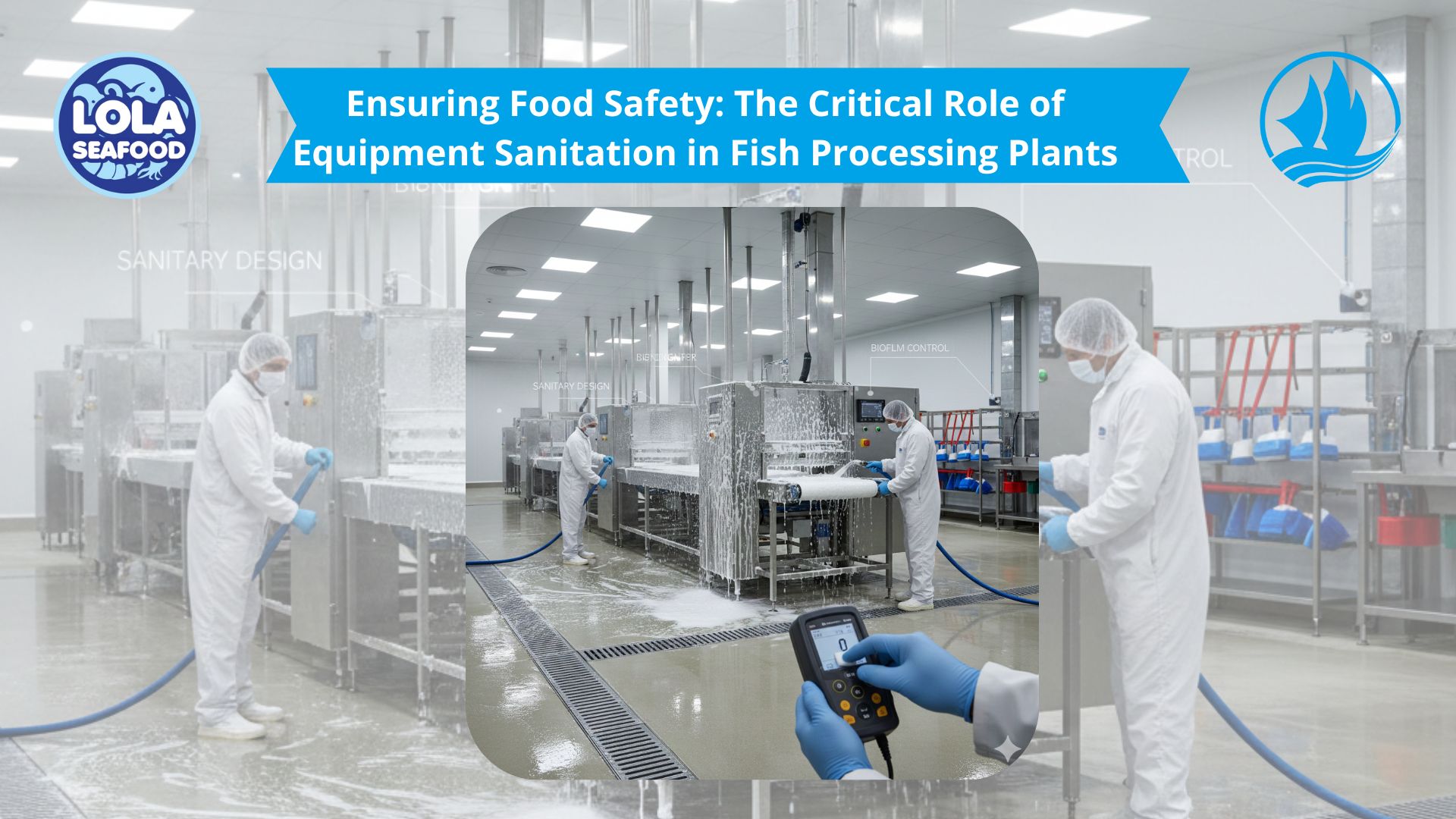
kelolalaut.com In the global food industry, fish and seafood are among the most perishable commodities. Their high protein content, neutral pH, and high water activity make them an ideal playground for spoilage bacteria and dangerous pathogens like Listeria monocytogenes, Salmonella, and Vibrio. For a fish processing plant, the difference between a premium product and a public health crisis often boils down to one factor: equipment sanitation.
Effective sanitation is not merely "cleaning"; it is a rigorous, scientifically backed process designed to eliminate physical, chemical, and biological hazards. Here is a comprehensive look at how modern fish processing plants implement equipment sanitation to ensure consumer safety and product longevity.
1. The Foundation: Sanitary Design
Before a single drop of water is sprayed, sanitation begins with the engineering of the equipment. Modern plants prioritize Sanitary Design Principles. This means machinery is constructed from non-corrosive materials—typically 304 or 316L stainless steel—that can withstand harsh chemical cleaners.
- Smooth Surfaces: Equipment must be free of pits, cracks, and crevices where "biofilms" (stubborn layers of bacteria) can anchor themselves.
- Accessibility: Machines are designed to be easily dismantled. If a technician cannot reach a part, they cannot clean it.
- Self-Draining: Frameworks are often sloped to prevent "dead zones" where stagnant water can collect and breed microbes.
2. The Five-Step Cleaning and Sanitizing Process
Sanitation is a disciplined sequence. Skipping a step can render the entire process ineffective. Most industrial fish plants follow a standardized five-step protocol:
I. Dry Pick-up and Pre-Rinse
The first step involves removing gross soils—fish scales, guts, and skin fragments—manually. Once the bulk waste is cleared, a low-pressure warm water rinse (approx. 45°C to 55°C) is used. High pressure is avoided here to prevent the aerosolization of bacteria into the air, which could contaminate nearby "clean" zones.
II. Application of Detergents (Foaming)
Detergents are applied to break down organic fats and proteins. In fish processing, alkaline chlorinated cleaners are the gold standard because they are highly effective at dissolving fish oils. The detergent is usually applied as a thick foam, allowing it to "cling" to vertical surfaces and conveyor belts for 10–15 minutes of contact time.
III. Mechanical Scrubbing and Post-Rinse
While chemicals do the heavy lifting, mechanical action (scrubbing) is often necessary to break the attachment of biofilms. After scrubbing, the equipment is rinsed with potable water to remove all traces of loosened soil and chemical residue.
IV. Sanitization
This is the "kill step." While cleaning removes visible dirt, sanitizing reduces the microbial load to safe levels. Common sanitizers include:
- Quaternary Ammonium Compounds (Quats): Leave a residual antimicrobial film.
- Peracetic Acid (PAA): Highly effective against Listeria and environmentally friendly.
- Chlorine Dioxide: Excellent for water disinfection and hard surfaces.
V. Final Inspection and Verification
The equipment is inspected visually, but "clean to the eye" isn't enough. Modern plants use ATP (Adenosine Triphosphate) Bioluminescence testing, which provides a digital reading of organic matter left on a surface within seconds.
3. Managing Biofilms: The Invisible Enemy
One of the greatest challenges in fish processing is the formation of biofilms. These are complex communities of bacteria that secrete a protective slime. Once a biofilm matures on a filleting machine or a skinning blade, standard sanitizers often cannot penetrate it.
To combat this, plants implement "deep clean" cycles using enzymatic cleaners that specifically digest the "glue" holding the biofilm together. Rotating different types of sanitizers also prevents bacteria from developing resistance.
4. Personnel and Environmental Hygiene
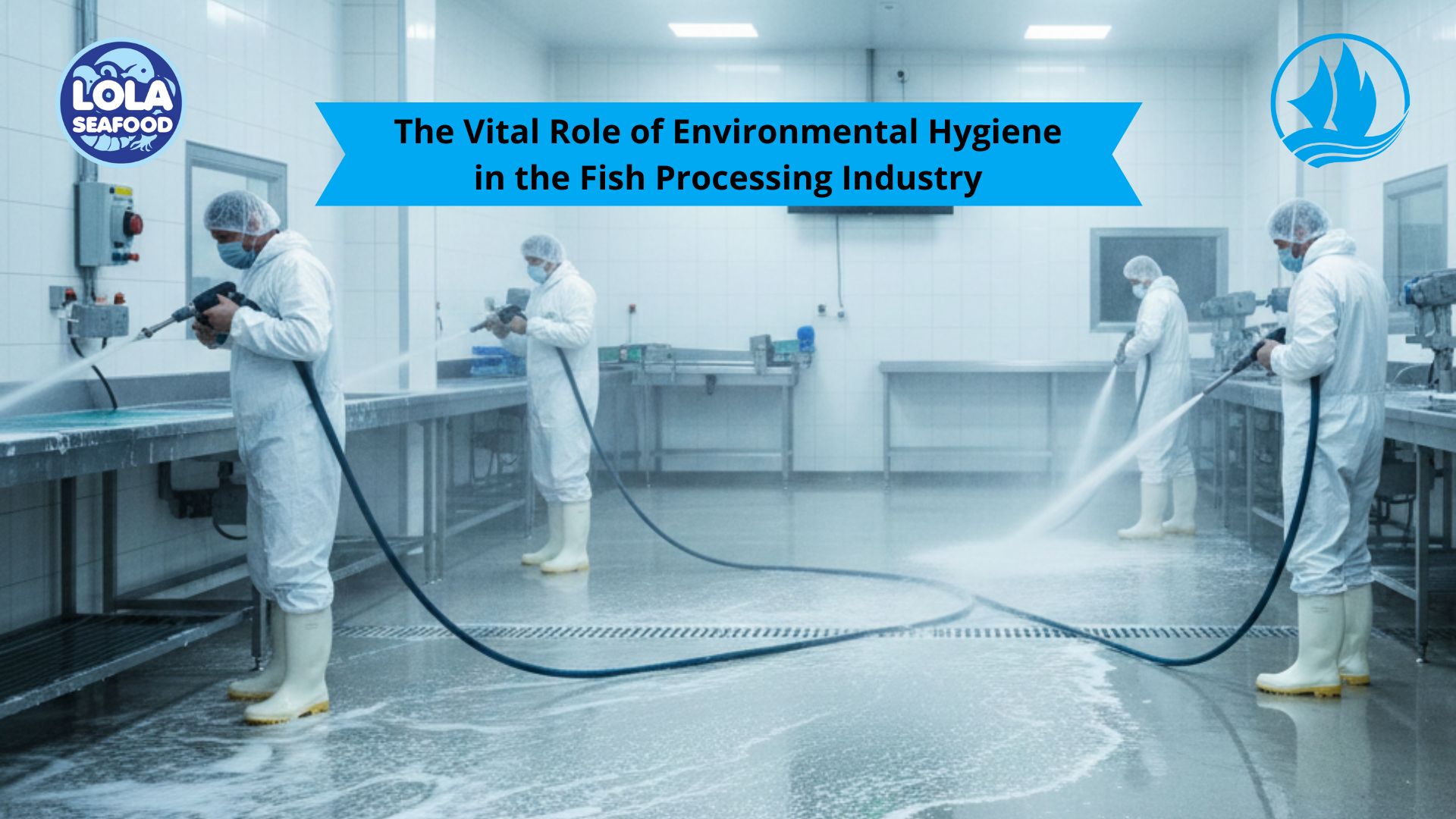
Equipment doesn't exist in a vacuum. Cross-contamination from floors, drains, or workers' gloves can quickly undo a clean machine.
- Zoning: Plants are divided into "High Care" (cooked/ready-to-eat) and "Low Care" (raw) areas.
- Footbaths: Sanitize boots before entering processing floors.
- Tool Color-Coding: Brushes used for floor drains are never the same color as those used for food-contact surfaces.
If youre interested in our Whiting Fish Whole Round,Barramundi Fillet Skin On,Catfish Fillet Skinless,Cobia Fillet Skinless,Coral Trout Fillet Skin On,Barramundi Whole Round / Whole Gilled Gutted Scaled,Corvina / Croaker / Jew Fish Whole Round / Whole Gilled Gutted Scaled,Black Pomfret Whole Round,Red / Scarlet Snapper Fillet Portion,Parrotfish Fillet Skinless please do not hesitate to contact us through email and/or Whatsapp


 in Modern Fish Processing Industries.jpg)