From Pristine Waters to Global Tables: Elevating Red Snapper Processing for the Export Market
By. Lutfi - 07 Apr 2026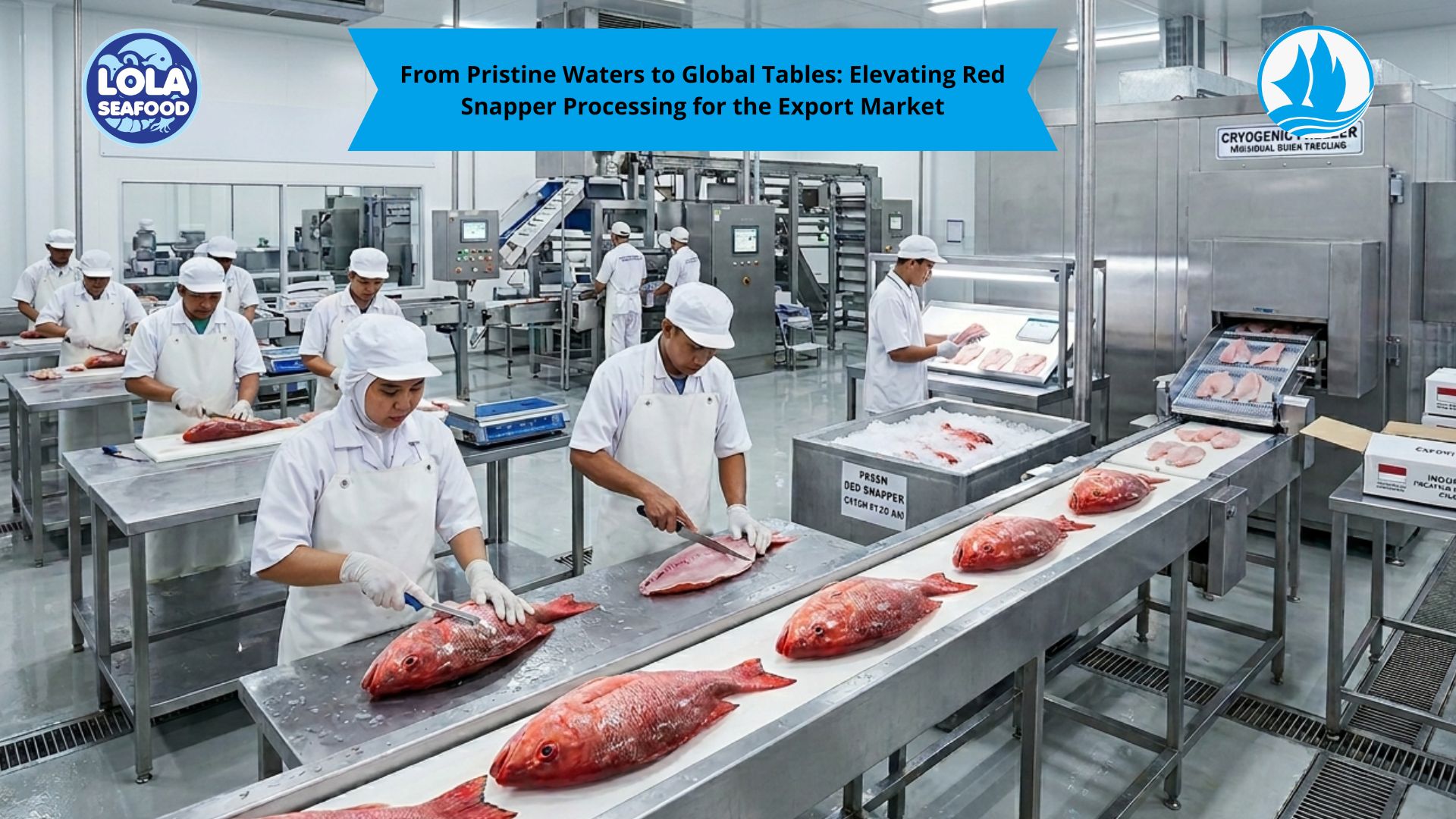
kelolalaut.com The global appetite for premium seafood is insatiable, and among the ocean’s most coveted treasures, the Red Snapper (Lutjanus campechanus) stands as a titan. Known for its firm texture, sweet nutty flavor, and iconic crimson hue, it is a staple in high-end dining from New York to Tokyo. However, transitioning from a local catch to a globally traded commodity requires more than just a net; it demands a sophisticated, high-tech processing infrastructure that meets the world’s most stringent quality and safety standards.
The Gold Standard: Cold Chain Integrity
The journey of an export-quality Red Snapper begins long before it reaches the factory. In the industrial sector, the Cold Chain is the absolute backbone of success. To penetrate markets like the EU or the USA, processors must implement "Vessel-to-Plate" temperature control.
- Immediate Icing: Fish must be chilled to near $0°C$ immediately upon harvest.
- Rapid Processing: Upon arrival at the facility, the "core temperature" is monitored religiously. Any spike in temperature can lead to histamine development or bacterial growth, instantly disqualifying the batch for export.
Precision Processing: Hand-Crafted Meets Industrial Scale
While automation is rising, the processing of Red Snapper often relies on a blend of skilled craftsmanship and advanced machinery. The goal is maximum yield without compromising the aesthetic appeal of the fish.
- Scaling and Gutting: Industrial descalers remove the tough scales while high-pressure water systems clean the cavity. For the "Gilled and Gutted" (G&G) market, the internal organs are removed with surgical precision to prevent enzymatic spoilage.
- Filleting and Pin-boning: This is where the value-add happens. Export markets demand perfectly trimmed fillets. Sophisticated V-cut machines or highly trained workers remove the pin bones—a critical requirement for "boneless" certification in Western supermarkets.
- CO Treatment (Carbon Monoxide): In specific markets (where permitted), a light application of CO gas is used to "fix" the natural red color of the skin, ensuring the fish looks as fresh in a freezer in Berlin as it did when it left the docks.
The Gatekeepers: Quality Assurance and Certifications
You don't just "sell" to the world; you are "admitted" into it. The modern fish processing industry operates under a microscope. To enter the global stage, a facility must possess a suite of "passports":
- HACCP (Hazard Analysis Critical Control Point): The fundamental framework for identifying and preventing biological, chemical, and physical hazards.
- BRCGS & IFS: These global food safety standards are often mandatory for supplying major retail chains in Europe and North America.
- Traceability Systems: Modern buyers demand to know exactly where their fish came from. Digitized logs tracking the specific vessel, the GPS coordinates of the catch, and the processing timestamp are now industry standards.
Innovation in Preservation: IQF and Vacuum Skin Packaging
To compete globally, processors are moving away from traditional bulk freezing. The industry has embraced Individual Quick Freezing (IQF). By freezing each fillet rapidly at temperatures as low as -40°C, the formation of large ice crystals is prevented. This protects the cellular structure of the meat, ensuring that when the consumer thaws the fish, the texture remains firm rather than mushy.
Furthermore, Vacuum Skin Packaging (VSP) has revolutionized retail presentation. It provides a second "skin" that prevents freezer burn and allows the vibrant red scales of the snapper to be the star of the shelf, driving impulse buys in premium grocery aisles.
Sustainability: The Ultimate Competitive Advantage
The modern export market is no longer just concerned with how a fish tastes, but how it was caught. The industrial sector is increasingly seeking MSC (Marine Stewardship Council) certification.
By implementing "Fishery Improvement Projects" (FIPs) and ensuring that the Red Snapper is harvested using sustainable methods (like vertical lines instead of destructive trawling), processors can command a "green premium." This ethical positioning is the key to unlocking the most lucrative segments of the global market, particularly in Scandinavia and North America.
The Economic Ripple Effect
When a processing plant successfully scales for export, the impact is profound. It transforms a seasonal local trade into a stable, year-round industry. It creates thousands of jobs—from laboratory technicians and quality controllers to logistics experts. By exporting processed fillets rather than whole raw fish, a country retains more Value-Added revenue within its borders, turning a natural resource into a sustainable economic engine.
If youre interested in our Red / Scarlet Snapper Fillet Portion , Red / Scarlet Snapper Fillet Skin On please do not hesitate to contact us through email and/or Whatsapp
.jpg)
.jpg)