Turning the Tide: Upcycling Fish Processing Waste into Sustainable Animal Feed and Aquafeed
By. Wiwik Rasmini - 02 Apr 2026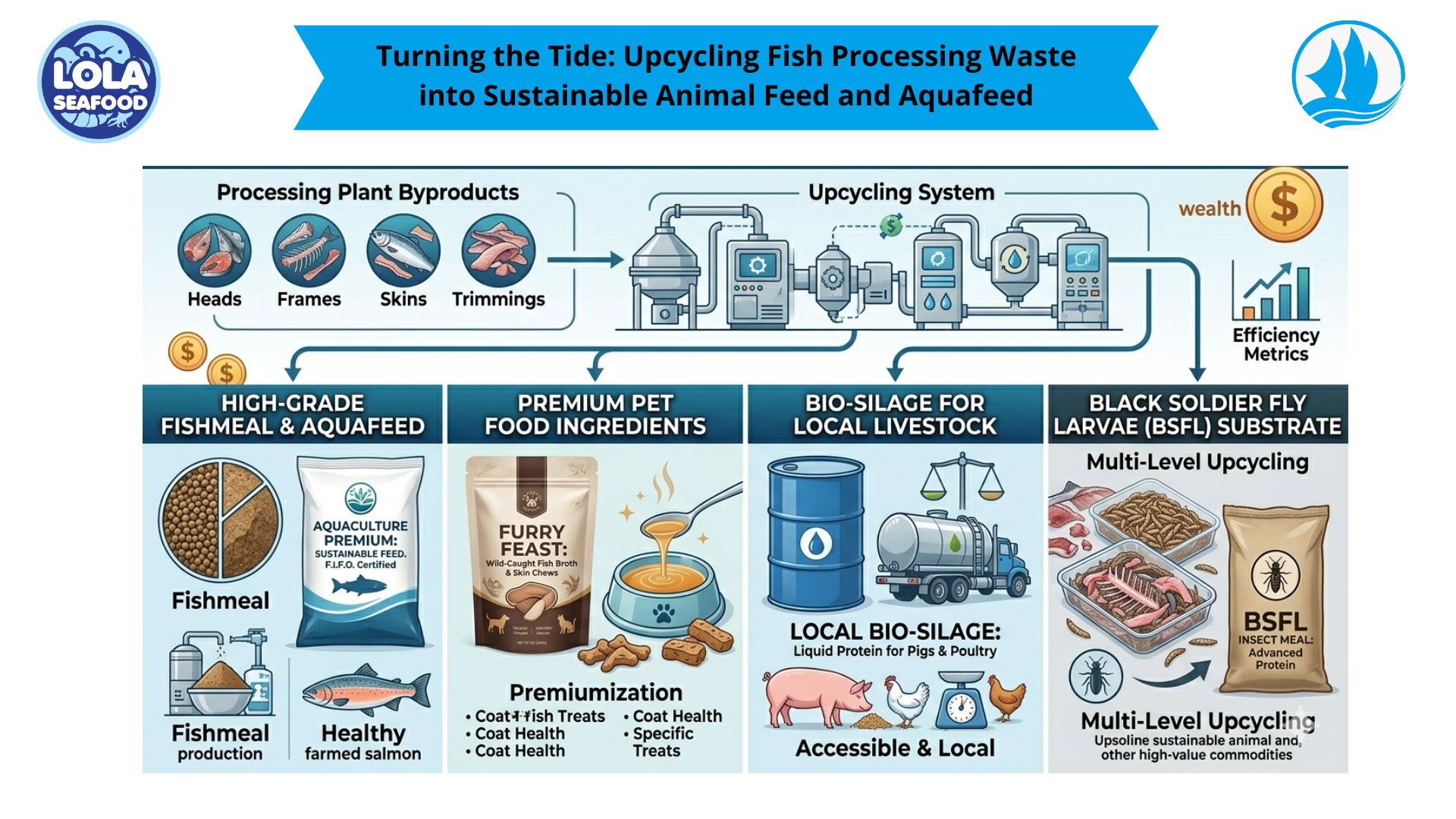
kelolalaut.com In the global quest for food security, the aquaculture and livestock industries face a daunting challenge: the rising cost and environmental impact of traditional feed ingredients. Soybeans and wild-caught forage fish have long been the pillars of animal nutrition, but their production often contributes to deforestation and overfishing. Enter the "Blue Transformation"—a movement focused on maximizing every gram of harvested fish.
For fish processing plants, the solution to their waste problem is literally in their hands. By repurposing fish heads, frames, and skin into high-quality animal feed, the industry is not just reducing its environmental footprint; it is creating a lucrative, self-sustaining loop that turns biological waste into high-protein "blue gold."
The Nutrient Profile of Processing Byproducts
While fillets are destined for human plates, the remaining "frames" (skeletons), heads, and trimmings are packed with biological value. These parts are exceptionally high in:
- Structural Proteins: Collagen and gelatin from skin and scales.
- Essential Minerals: Calcium and phosphorus from fish bones.
- Residual Fats: Omega-3 fatty acids that are vital for animal brain development and coat health.
Rather than paying disposal fees to send these materials to landfills, processing plants are now integrating rendering or silage units to capture this value on-site.
1. High-Grade Fishmeal for Sustainable Aquaculture
Paradoxically, one of the biggest markets for fish waste is the fish industry itself. Modern aquaculture requires high-protein feed to grow species like salmon, tilapia, and shrimp. Traditionally, this protein came from "feeder fish" like anchovies, which are vacuumed from the ocean specifically for feed.
By processing trimmings into High-Grade Fishmeal, plants provide a sustainable alternative. This circular approach—feeding fish byproducts back to farmed fish—significantly reduces the "Fish In: Fish Out" (FIFO) ratio. This shift is highly attractive to eco-conscious retailers and consumers, allowing processors to sell their feed at a premium as a "certified sustainable" ingredient.
2. The Pet Food Revolution: Premiumization
The pet food industry is undergoing a massive shift toward "human-grade" and "functional" ingredients. Pet owners are increasingly looking for grain-free, protein-rich diets for their dogs and cats. Fish byproducts fit this niche perfectly.
- Dehydrated Fish Treats: Fish skins, when dried and rolled, become high-protein, hypoallergenic dental chews for dogs.
- Fish Broths and Toppers: Liquid extracts from boiled fish heads are packaged as savory "toppers" to encourage picky eaters.
- Salmon Oil Pellets: High-fat trimmings are processed into oil supplements that promote shiny coats and joint health in aging pets. By tapping into the pet industry, fish processors are moving away from bulk commodity markets and into high-margin consumer packaged goods.
3. Bio-Silage: A Lifeline for Small-Scale Livestock
In many regions, particularly in developing economies, the cost of imported soy-based poultry and pig feed is a barrier for local farmers. Fish waste can be converted into Fish Silage—a liquid protein source created by grinding waste and adding acid to prevent spoilage.
Unlike fishmeal, which requires expensive drying equipment, silage can be produced with minimal infrastructure. This product is a "superfood" for pigs and chickens, providing them with a more diverse amino acid profile than plant-based proteins. For the processing plant, this creates a strong, localized revenue stream and strengthens ties with the regional agricultural community.
4. Insect Feed: The Next Frontier
A rising trend in the circular economy is the use of fish waste as a substrate for Black Soldier Fly Larvae (BSFL). These insects are incredibly efficient at consuming organic waste and converting it into high-protein insect biomass.
Processing plants can partner with insect farms, providing fish waste as a nutrient-rich "feedstock" for the larvae. Once the larvae mature, they are harvested and processed into insect meal, which is then sold back to the poultry or aquaculture industries. This multi-level upcycling ensures that absolutely nothing is lost, and the resulting insect meal is often even more sustainable than traditional fishmeal.
Strategic Advantages and Market Growth
The transition from a processor to a feed-ingredient producer offers three strategic advantages:
- Zero-Waste Certification: Many global retailers now require "Zero Waste to Landfill" certifications. Upcycling byproducts makes a plant more competitive in the international market.
- Carbon Footprint Reduction: Utilizing waste on-site or selling it locally reduces the massive carbon emissions associated with transporting waste to disposal sites.
- Revenue Stability: While the price of fresh fish can be volatile based on seasons and catch limits, the demand for animal feed is constant and growing.
A Smarter Way to Feed the Planet
The utilization of fish processing waste for animal feed is a masterclass in efficiency. It addresses the "Protein Gap"—the world's growing need for protein—without putting more pressure on our already stressed oceans. By viewing fish heads and frames not as garbage, but as the raw material for the next generation of animal nutrition, processing plants can transform themselves into vital hubs of the global food system.
In this new model, the goal is simple: Capture every calorie. When we stop throwing away 30% of our harvest, we don't just make more money—we build a more resilient and responsible planet.
If youre interested in our Whiting Fish Whole Round,Barramundi Fillet Skin On,Catfish Fillet Skinless,Cobia Fillet Skinless,Coral Trout Fillet Skin On,Barramundi Whole Round / Whole Gilled Gutted Scaled,Corvina / Croaker / Jew Fish Whole Round / Whole Gilled Gutted Scaled,Black Pomfret Whole Round,Red / Scarlet Snapper Fillet Portion,Parrotfish Fillet Skinless please do not hesitate to contact us through email and/or Whatsapp
.jpg)
.jpg)