Preserving the Catch: How Co-Extruded Plastic Packaging Revolutionized the Fish Processing Industry
By. Lutfi - 15 May 2026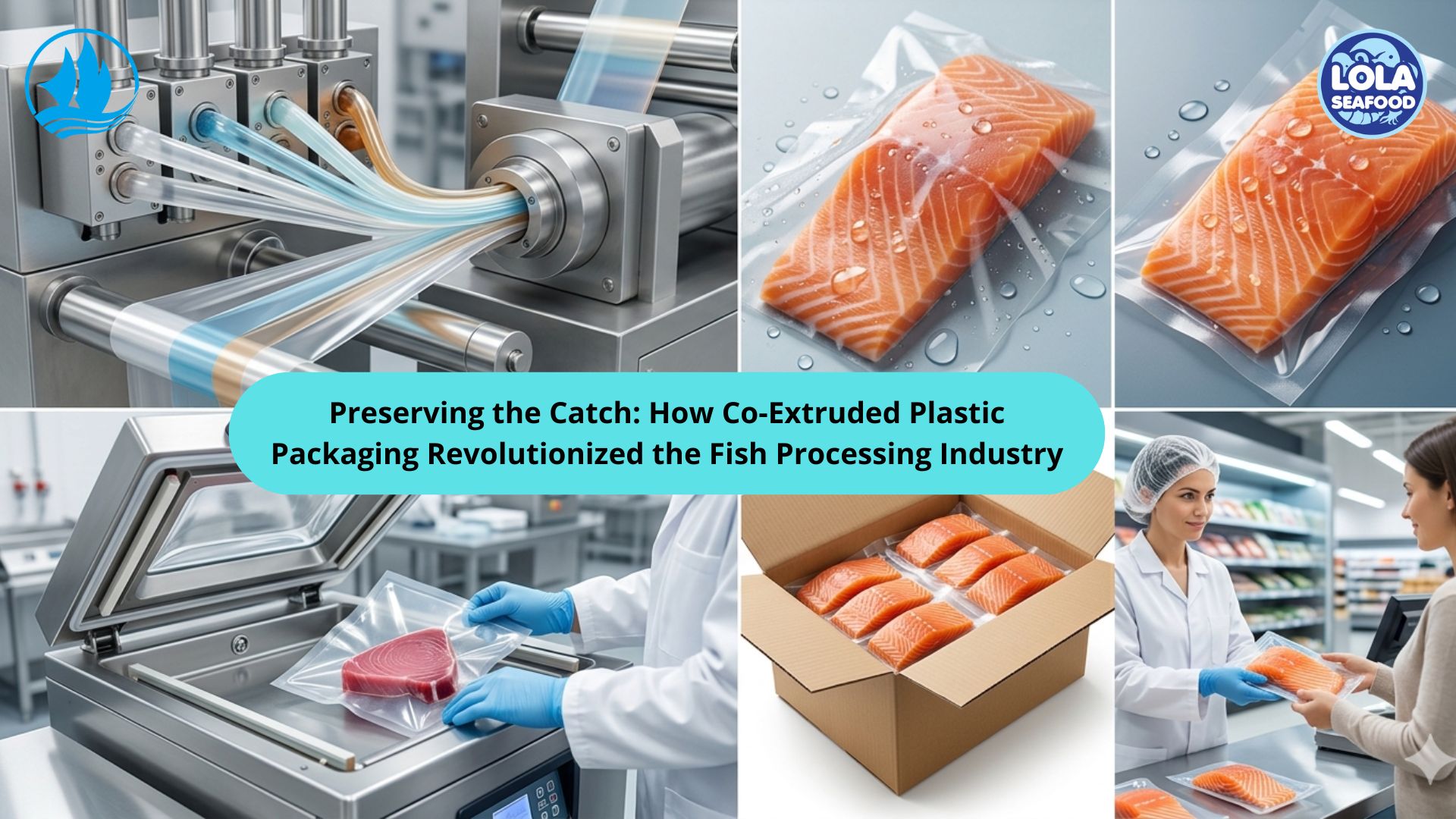
kelolalaut.com The global seafood industry operates against a relentless ticking clock. From the moment fish are harvested from the ocean, a rapid process of degradation begins. For centuries, the primary challenge of the fish processing industry has been preservation—specifically, keeping the product fresh while completely managing moisture. In the modern era, the solution to this challenge has been profoundly advanced by material science, specifically through co-extruded (co-ex) plastic packaging. This specialized technology has become the backbone of seafood logistics, ensuring that premium fish products reach consumers completely intact, safe, and, crucially, without leaking or absorbing unwanted external moisture.
Understanding Co-Extruded Plastic
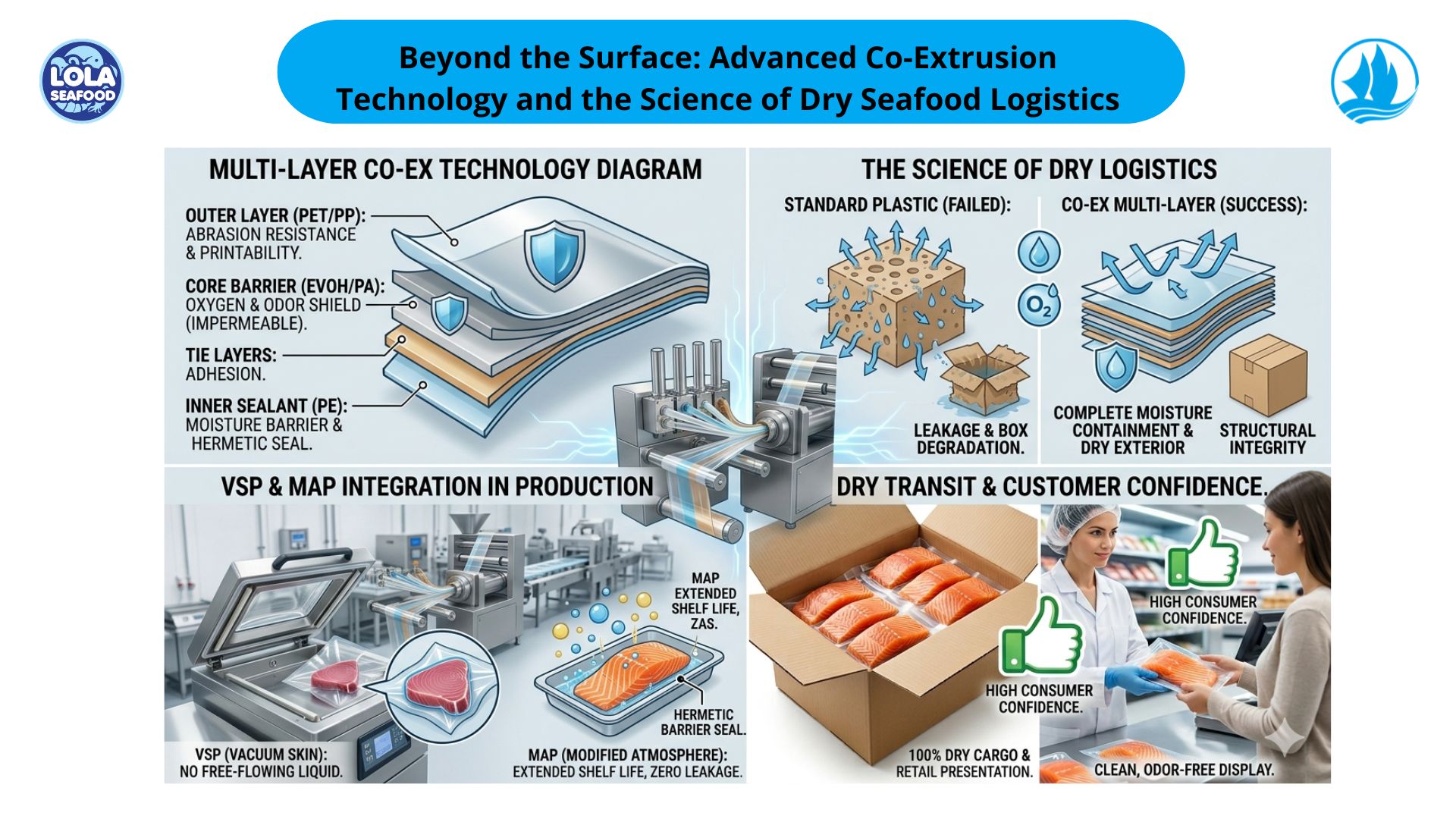
To appreciate its impact, one must understand what co-extruded plastic is. Unlike standard, single-layer plastic bags, co-extruded film is a high-tech composite. It is manufactured by extruding two or more polymers simultaneously through a single die to create a multi-layered sheet.
This process allows manufacturers to combine the distinct strengths of different plastics into one thin, high-performance film. For instance, an outer layer might be chosen for its puncture resistance, a middle layer for its oxygen-blocking properties, and the inner layer for its ability to create an airtight, waterproof seal.
The Ultimate Moisture Barrier: Keeping It "Not Wet"
In fish processing, moisture control is a dual-sided battle:
- Preventing Desiccation: The fish must retain its natural juices so it does not dry out and lose texture.
- Preventing Leakage and External Contamination: The melted ice, water, and fish oils must be securely contained inside the package, while outside humidity and bacteria must be kept out.
Co-extruded plastics are specifically engineered with advanced water vapor barriers, typically utilizing layers of Polyethylene (PE) or Polypropylene (PP). These polymers are highly hydrophobic. When fish is vacuum-sealed or gas-flushed within a co-ex pouch, the plastic acts as an impenetrable wall.
For transport, this is revolutionary. Traditional packaging often suffered from capillary action or weak seams, leading to messy leaks that ruined outer cardboard shipping boxes and created foul odors. Co-extruded film ensures that the outside of the packaging remains completely dry and clean to the touch, making it ideal for air freight, supermarket displays, and direct-to-consumer delivery.
Key Advantages in Fish Processing
The adoption of co-extruded plastic has transformed several operational facets of the seafood supply chain:
1. Extended Shelf Life and Food Safety
Fish spoils rapidly due to bacterial growth and lipid oxidation (exposure to oxygen turning fish oils rancid). Co-ex films often incorporate Polyamide (PA) or Ethylene Vinyl Alcohol (EVOH) layers. These materials offer superb oxygen barrier properties. Combined with the moisture barrier, this dual protection slows down spoilage dramatically, extending the shelf life of fresh fish from a few days to several weeks under proper refrigeration.
2. High Puncture Resistance
Fish often have sharp fins, bones, and shells (in the case of crustaceans). Standard plastic would easily puncture, leading to a loss of vacuum pressure and subsequent moisture leakage. Co-extrusion allows for the inclusion of heavy-duty, flexible layers that resist piercing, ensuring the package remains hermetically sealed throughout rough transit.
3. Superior Sealing Integrity
Even the best plastic film is useless if the seal fails. Co-ex films are designed with internal layers that melt and bond perfectly at specific thermal temperatures. This guarantees a leak-proof seal that can withstand the high-pressure environments of vacuum packing and frozen storage without cracking.
Economic and Environmental Implications
From a business perspective, the efficiency of co-extruded plastic reduces food waste significantly—a major win for profitability and global food security. Furthermore, because the packaging is incredibly efficient, it allows for thinner films (down-gauging), which reduces the overall volume of plastic used per package compared to older, bulky alternatives.
However, the multi-layered nature of co-ex plastics does present a challenge for traditional recycling streams, as separating the fused layers is difficult. In response, modern material science is actively developing monomaterial co-extruded films—using different grades of the same plastic family (like all-polyethylene) to achieve the same moisture-barrier performance while remaining 100% recyclable.
If youre interested in our Whiting Fish Whole Round,Barramundi Fillet Skin On,Catfish Fillet Skinless,Cobia Fillet Skinless,Coral Trout Fillet Skin On,Barramundi Whole Round / Whole Gilled Gutted Scaled,Corvina / Croaker / Jew Fish Whole Round / Whole Gilled Gutted Scaled,Black Pomfret Whole Round,Red / Scarlet Snapper Fillet Portion,Parrotfish Fillet Skinless,Baby Octopus Flower,Bonito Fillet Portion Cut,Catfish Fillet Skinless,Coral Trout Fillet Skinless,Baby Octopus Flower Baby Octopus Whole Cleaned Baby Octopus Whole Round Barramundi Fillet Portion Cut please do not hesitate to contact us through email and/or Whatsapp