Beyond the Surface: Advanced Co-Extrusion Technology and the Science of Dry Seafood Logistics
By. Lutfi - 15 May 2026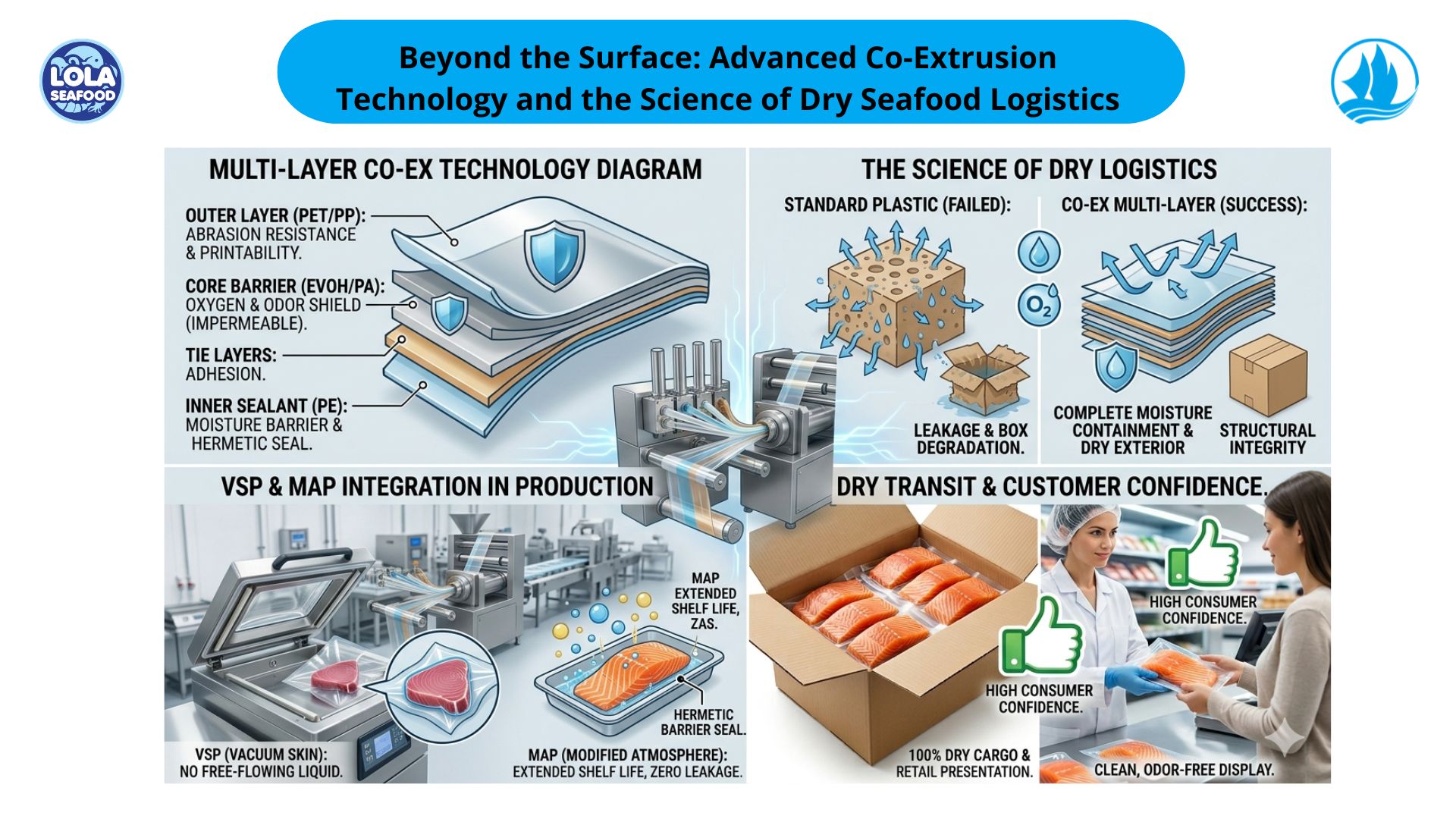
kelolalaut.com In fish processing, managing liquid is a constant battle. Freshly harvested fish inherently consist of high water content, and during processing and transport, they release fluids containing proteins, salts, and oils. Traditional, single-layer packaging options frequently succumb to capillary action, microscopic tears, or weak seal joins. When these failures occur, fish liquids escape into the outer environment.
The consequences of leaky packaging are widespread:
- Corrugated Box Degradation: Most secondary transport relies on corrugated cardboard boxes. When fish oils and water leak onto cardboard, the structural integrity of the box collapses, risking crushed cargo during shipping.
- Cross-Contamination: Escaping fluids create an environment ripe for bacterial growth, creating cross-contamination risks for other food items in the same delivery vehicle or supermarket display.
- Aesthetic and Odor Issues: Customers are highly sensitive to the odor and appearance of fresh seafood. A wet, sticky package instantly signals a lack of freshness and hygiene, destroying consumer confidence.
To solve this, the industry relies on the "dry transit" principle—a guarantee that the exterior of the packaged fish remains entirely bone-dry from the processing plant to the consumer's basket.
Engineering the Perfect Multi-Layer Barrier
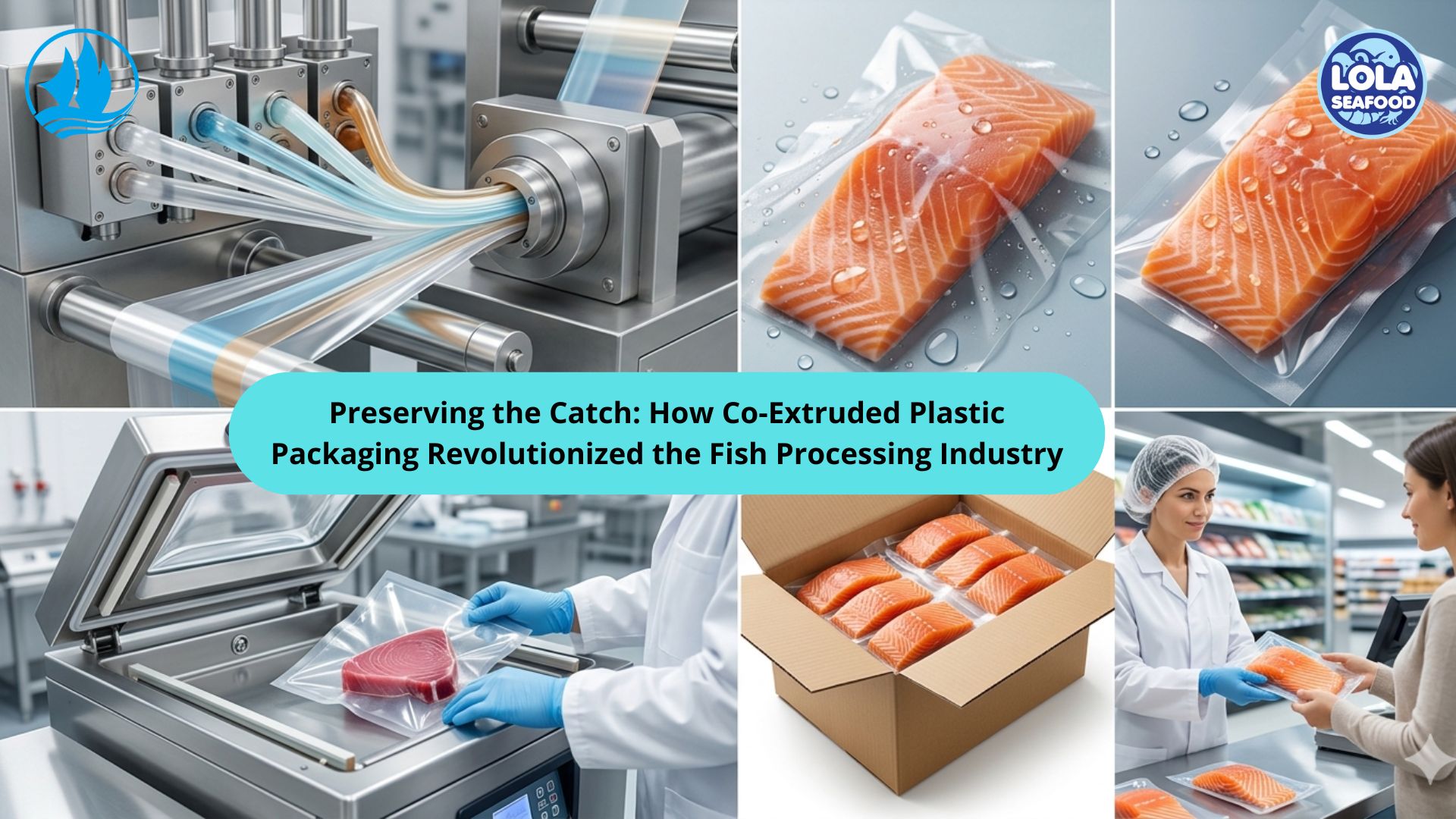
Co-extruded plastic achieves this level of security through advanced polymer physics. Instead of relying on a single plastic type, a co-extrusion line melts and layers different resins simultaneously. Each layer serves a precise, strategic purpose to create a unified shield.
The Inner Sealant Layer (Typically Polyethylene)
The innermost layer, which comes into direct contact with the fish, is designed for maximum seal integrity. Polyethylene (PE) is highly hydrophobic, meaning it naturally repels water and prevents the fish’s natural juices from penetrating the plastic structure. Furthermore, PE has an excellent thermal sealing profile. When passed through a industrial vacuum sealer, it melts and bonds seamlessly, ensuring that the seal is just as strong as the film itself.
The Core Barrier Layer (Polyamide or EVOH)
The middle layers are dedicated to preventing gas and vapor transmission. Polyamide (PA, commonly known as nylon) provides exceptional mechanical strength and puncture resistance. This layer ensures that sharp fish fins or bones do not pierce the packaging. Often combined with Ethylene Vinyl Alcohol (EVOH), this core layer forms an airtight barrier that keeps oxygen out and seals moisture completely inside, preventing desiccation (freezer burn) during cold storage.
The Outer Protective Layer
The exterior layer is optimized for durability, clarity, and printability. It resists abrasions from handling, conveyor belts, and shipping crates, ensuring the visual presentation remains flawless.
Operational Impacts on Fish Processing Plants
The integration of high-performance co-ex films has fundamentally altered operations within fish processing facilities. By utilizing film that guarantees zero leakage, plants can streamline their workflow.
Vacuum skin packaging (VSP) and Modified Atmosphere Packaging (MAP) both rely heavily on co-extruded technology. In VSP, the co-ex film softens under heat and drapes tightly over the fish fillet like a second skin, locking the product flat against a tray. Because the film molds perfectly to the contours of the fish, there is no space for free-flowing liquids to accumulate. This keeps the presentation exceptionally clean and visually appealing on retail shelves.
Additionally, because these films offer superior puncture resistance, processing plants experience drastically lower reject rates on the production line. Less time is spent re-packing leaking items, which directly boosts daily throughput and reduces operational overhead.
Future Horizons: The Drive Toward Sustainability
While co-extruded plastics have solved the moisture and preservation challenges of the seafood industry, they face scrutiny regarding their environmental footprint. Because they are made of bonded, dissimilar plastics (like PE and PA), traditional co-ex films are difficult to separate and recycle in standard municipal facilities.
To address this, material scientists are pioneering monomaterial co-extrusion. By co-extruding different densities and variations of a single polymer family—such as utilizing multiple specialized layers of pure Polyethylene—manufacturers are developing films that match the strict moisture-barrier and puncture-resistant standards of traditional films, while remaining fully compatible with existing recycling infrastructure.
Final Thoughts
The evolution of fish processing from a localized, immediate-consumption market to a sophisticated global supply chain has been made possible by packaging innovations. Co-extruded plastic packaging acts as an unyielding guardian of quality. By engineering a multi-layered material that completely prevents leakage and external moisture transfer, the industry successfully fulfills its promise of delivering premium, fresh seafood that is guaranteed to stay clean, dry, and safe at every step of the journey.
If youre interested in our Whiting Fish Whole Round,Barramundi Fillet Skin On,Catfish Fillet Skinless,Cobia Fillet Skinless,Coral Trout Fillet Skin On,Barramundi Whole Round / Whole Gilled Gutted Scaled,Corvina / Croaker / Jew Fish Whole Round / Whole Gilled Gutted Scaled,Black Pomfret Whole Round,Red / Scarlet Snapper Fillet Portion,Parrotfish Fillet Skinless,Baby Octopus Flower,Bonito Fillet Portion Cut,Catfish Fillet Skinless,Coral Trout Fillet Skinless,Baby Octopus Flower Baby Octopus Whole Cleaned Baby Octopus Whole Round Barramundi Fillet Portion Cut please do not hesitate to contact us through email and/or Whatsappp