Global Catch: High-Value Fish Products with Prime Export Potential
By. Taufiq - 19 May 2026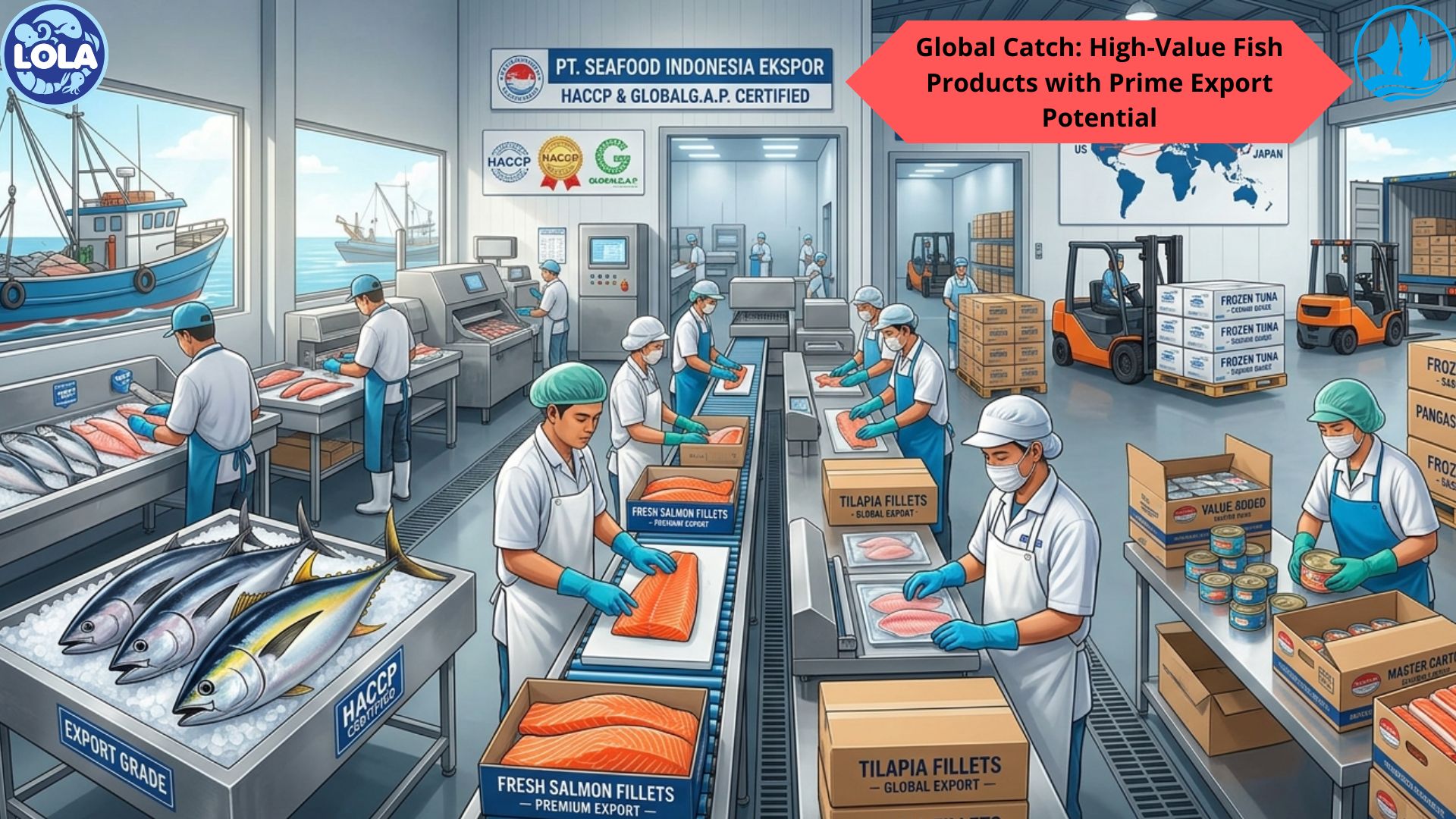
kelolalaut.com The global seafood market is experiencing unprecedented growth, driven by a rising international demand for healthy, protein-rich diets. For seafood producers and exporters, this presents a massive opportunity. However, entering the international market requires more than just a large catch; it demands strategic selection of the right fish products that can withstand long-distance logistics, meet strict international regulatory standards, and cater to global consumer preferences.
From premium fresh catches to shelf-stable processed goods, certain fish products consistently dominate the export market. Here is a look at the top fish products best suited for global export.
1. Frozen and Fresh Premium Tuna (Thunnus spp.)
Tuna is arguably the king of pelagic fish exports. The global demand for species like Skipjack, Yellowfin, and Bigeye tuna remains consistently high, particularly in markets like the United States, Japan, and the European Union.
- Sashimi-Grade Tuna: High-value markets like Japan rely heavily on imports of ultra-frozen Yellowfin and Bluefin tuna. These are frozen at -60°C immediately after harvest to preserve color and texture.
- Canned Tuna: For broader consumer markets, canned tuna offers an excellent, shelf-stable export option. It bypasses complex cold-chain logistics, making it highly profitable and accessible for global distribution.
2. Farmed and Wild-Caught Salmon (Salmo salar)
Salmon has successfully transitioned from a luxury item to a mainstream global staple. It is highly sought after for its rich omega-3 fatty acid content and vibrant color.
- Export Forms: Salmon is highly versatile, exported as whole gutted fish, fresh fillets, or premium smoked salmon.
- Target Markets: The EU, China, and North America are massive importers of salmon. Because it commands a premium price, investing in rigorous quality control and cold-chain logistics for salmon guarantees excellent profit margins.
3. Frozen Tilapia and Pangasius Fillets
For aquaculture producers looking for high-volume, cost-effective exports, white-fleshed fish like Tilapia and Pangasius (often marketed as dory or basa) are ideal choices.
- The Appeal: These fish have a mild flavor, firm texture, and a highly competitive price point, making them incredibly popular among Western supermarkets, fast-food chains, and school meal programs.
- Processing Strategy: Exporting these fish as skinless, boneless frozen fillets packaged in IQF (Individually Quick Frozen) form maximizes their marketability, as modern consumers prioritize convenience.
4. Value-Added and Processed Fish Products
As urban lifestyles accelerate worldwide, the demand for convenience food has skyrocketed. Raw fish exports are lucrative, but value-added fish products often yield the highest profit margins.
- Surimi and Fish Paste: Made primarily from white fish like Alaska Pollock, surimi is processed into imitation crab sticks, fish cakes, and seafood bites. It is a staple export to East Asian and Western markets alike.
- Pre-Seasoned and Breaded Fillets: Ready-to-cook products—such as breaded fish fingers, marinated salmon portions, and pre-grilled fillets—are highly favored by international retail sectors.
Key Pillars for Successful Fish Export
Navigating the international seafood trade requires strict adherence to global standards. To successfully export any of the fish products mentioned above, exporters must focus on three critical pillars:
Cold Chain Integrity
The golden rule of seafood export is maintaining the temperature. Whether exporting fresh fish packed in airline-approved gel ice or frozen fillets shipped via reefer containers, a breach in the cold chain destroys product quality and leads to costly rejections at destination ports.
Strict International Compliance
Different regions have rigid safety and health standards. Exporters must secure necessary certifications, such as:
- HACCP (Hazard Analysis Critical Control Point)
- BRCGS or IFS for European retail
- FDA registration for entering the US market
Sustainability and Traceability
Modern international buyers want to know where their fish came from. Gaining certifications from bodies like the Marine Stewardship Council (MSC) for wild-caught fish or the Aquaculture Stewardship Council (ASC) for farmed fish can open doors to premium buyers who refuse to source uncertified seafood.
Conclusion
The global appetite for quality fish products shows no signs of slowing down. Whether you choose to leverage high-volume aquaculture species like Tilapia, tap into the premium market with Tuna and Salmon, or capture the convenience sector with value-added surimi, the potential for growth is immense. By aligning your production with strict international quality, sustainability, and cold-chain standards, your seafood business can successfully hook a massive share of the global market.
If youre interested in our Whiting Fish Whole Round,Barramundi Fillet Skin On,Catfish Fillet Skinless,Cobia Fillet Skinless,Coral Trout Fillet Skin On,Barramundi Whole Round / Whole Gilled Gutted Scaled,Corvina / Croaker / Jew Fish Whole Round / Whole Gilled Gutted Scaled,Black Pomfret Whole Round,Red / Scarlet Snapper Fillet Portion,Parrotfish Fillet Skinless,Baby Octopus Flower,Bonito Fillet Portion Cut,Catfish Fillet Skinless,Coral Trout Fillet Skinless,Baby Octopus Flower Baby Octopus Whole Cleaned Baby Octopus Whole Round Barramundi Fillet Portion Cut Black Pomfret Portion Cut Bonito Whole Round please do not hesitate to contact us through email and/or Whatsappp
.jpg)
 Statement The Financial Heartbeat of a Business.jpg)
.jpg)
 Statement The Financial Heartbeat of a Business (1).jpg)