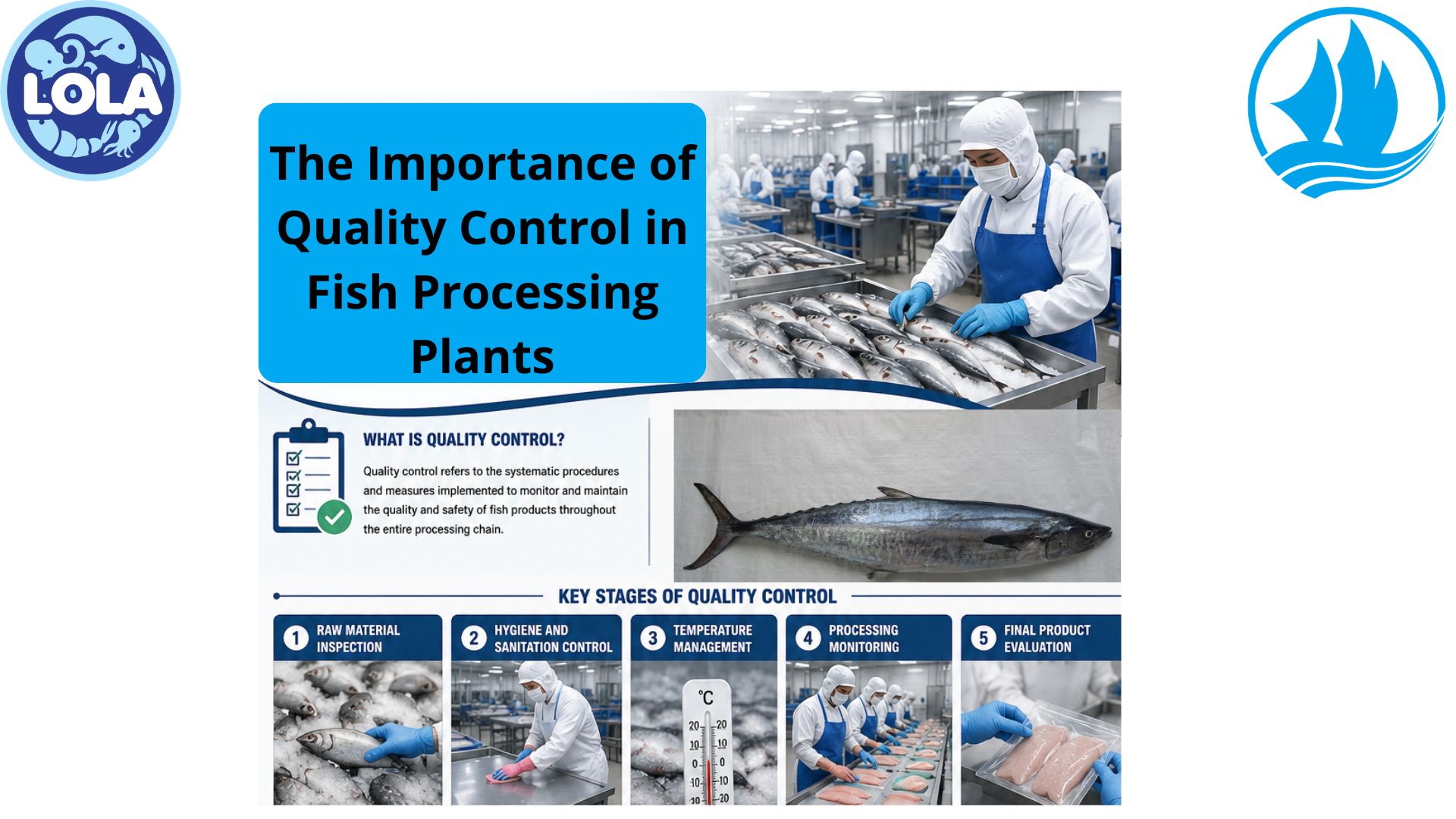
Here are The Application of HACCP in the Fish Processing Industry
By. Wildan - 04 Jun 2026.jpg)
kelolalaut.com The global seafood industry plays a vital role in meeting the world's nutritional demands, providing a rich source of high-quality protein, omega-3 fatty acids, and essential micronutrients. However, fish and fishery products are highly perishable and prone to biological, chemical, and physical hazards. From the moment fish are caught to the time they reach the consumer’s plate, maintaining safety is a critical challenge. To address these vulnerabilities, the global seafood sector relies on a systematic preventive approach known as Hazard Analysis Critical Control Point (HACCP).
Understanding HACCP in Seafood Processing
Historically developed to ensure safe food for space expeditions, HACCP has become the gold standard for food safety regulation worldwide. Unlike traditional "end-product testing"—which only detects contamination after the product is already finished—HACCP focuses on identifying potential hazards throughout the production process and preventing them from occurring in the first place.
In fish processing, implementing HACCP is particularly crucial due to the unique nature of seafood. Fish can naturally harbor pathogens, accumulate environmental toxins, and deteriorate rapidly if temperature controls fail.
The Core Elements: Prerequisite Programs
Before a fish processing facility can implement a HACCP plan, it must establish strong foundational frameworks known as Prerequisite Programs. These include Good Manufacturing Practices (GMP) and Standard Operating Sanitation Procedures (SSOP). These programs handle general hygiene conditions, such as:
-
Water and ice quality (which must be potable)
-
Cleanliness of food-contact surfaces
-
Prevention of cross-contamination
-
Employee hygiene and health management
Once these foundations are solid, the specific HACCP plan can be constructed.
Applying the Principles to Fish Processing
Implementing HACCP involves a systematic analysis of the entire processing line, typically structured around seven core principles.
1. Hazard Analysis
The first step involves identifying any biological, chemical, or physical hazards associated with the specific fish species and processing methods. For example:
-
Biological: Pathogenic bacteria like Salmonella, Listeria monocytogenes, or parasites in wild-caught fish.
-
Chemical: Histamine formation (scombroid poisoning) in tuna or mackerel due to temperature abuse, or heavy metal accumulation like mercury.
-
Physical: Fishbones, metal fragments from processing machinery, or fish hooks.
2. Determining Critical Control Points (CCPs)
A CCP is a specific step in the process where a control measure can be applied to prevent, eliminate, or reduce a hazard to an acceptable level. In a typical fish canning or freezing facility, common CCPs include:
-
Receiving: Checking the temperature and freshness of raw fish upon arrival.
-
Chilling/Freezing: Maintaining strict temperature controls during storage to prevent bacterial growth and histamine formation.
-
Cooking/Pasteurization: Ensuring enough heat is applied to destroy harmful bacteria.
3. Establishing Critical Limits
For every identified CCP, a maximum or minimum boundary must be set to separate safe processing conditions from unsafe ones. For example, a critical limit at the receiving stage might dictate that the internal temperature of the incoming fish must be 4°C (39.2°F) or lower. For histamine-susceptible fish, the limit might state that histamine levels must not exceed 50 parts per million (ppm).
4. Monitoring Procedures
Monitoring involves planned, continuous, or sequential observations to ensure that a CCP remains within its critical limits. This could involve automated temperature loggers in cold storage rooms or quality control staff manually checking internal fish temperatures with calibrated thermometers at scheduled intervals.
5. Corrective Actions
When monitoring indicates that a critical limit has been breached, immediate corrective actions must be taken. The HACCP plan must predetermine these actions. For instance, if a refrigeration room rises to 10°C, the corrective action might involve moving the fish to an operational cold room, testing the batch for bacterial load, or discarding the batch entirely if safety cannot be guaranteed.
6. Verification Procedures
Verification ensures that the HACCP system is working effectively according to the plan. This includes calibrating thermometers, reviewing monitoring logs, and conducting occasional end-product microbiological testing to confirm that the preventive measures are actually succeeding.
7. Record-Keeping and Documentation
Accurate record-keeping is the backbone of HACCP. In the event of a food safety audit or a product recall, documentation provides legal and operational proof that the seafood was processed safely. This includes temperature logs, corrective action reports, and sanitation checklists.
If youre interested in our Baby Octopus Flower, Baby Octopus Whole Cleaned, Baby Octopus Whole Round, Barramundi Fillet Portion Cut, Barramundi Fillet Skin On, Barramundi Fillet Skin On. Barramundi Fillet Skinless, Barramundi Whole Round / Whole Gilled Gutted Scaled,Black Pomfret Portion Cut, Bonito Fillet Loin,Bonito Fillet Portion Cut,Bonito Whole Round,Catfish Fillet Skinless,Catfish Steak,Catfish Whole Round / Whole Gilled Gutted,Cobia Fillet Skin On,Cobia Fillet Skinless,Cobia Whole Round / Whole Gilled Gutted,Coral Trout Fillet Skinless,Coral Trout Fillet Skinless,Coral Trout Whole Round,Corvina / Croaker / Jew Fish Whole Round / Whole Gilled Gutted Scaled,Corvina / Croaker / Jewfish Fillet Skin On,Corvina Fillet Skin Patch,Whiting Fish Whole Round,Parrotfish Fillet Skinless,Red / Scarlet Snapper Fillet Portion,Red / Scarlet Snapper Fillet Skin On,Red / Scarlet Snapper Indonesian Seaperch Whole Round / Whole Gilled Gutted Scaled,Red / Scarlet Snapper Saddle Tailed Seaperch Whole Round / Whole Gilled Gutted Scaled,Shark Belly,Shark Cartilage,Shark Fillet,Shark Flake,Snapper / Red Bass Whole Round / Whole Gilled Gutted Scaled,Snapper Fillet Skinless,Snapper Mangrove Jack Whole Round / Whole Gilled Gutted Scaled,Spanish Mackerel Cutlet / Kingfish Steak,Squid Flower Cut,Squid Ring, Squid Skewer,Squid Tube,Squid Whole Cleaned,Squid Whole Round,Sweetlips Fillet Skin On,Sweetlips Fillet Skinless,Sweetlips Whole Round / Whole Gilled Gutted Scaled,White Snapper / Robinson Sea Bream Fillet Skin On,White Snapper / Robinson Seabream / Seabream Whole Round / Whole Gilled Gutted Scaled,Cuttlefish Fillet.Cuttlefish Pineapple Cut,Cuttlefish Whole Cleaned,Cuttlefish Whole Round,Emperor Fillet Skin On,Emperor Fillet Skinless,Emperor Grass Whole Round / Whole Gilled Gutted Scaled,Emperor Red Spot Whole Round / Whole Gilled Gutted Scaled,Emperor Whole Round / Whole Gilled Gutted Scaled,Giant Trevalley Fillet Skin On,Giant Trevalley Whole Round,Goldband / Crimson Snapper Fillet Portion Cut,Goldband / Crimson Snapper Fillet Skin On,Goldband / Crimson Snapper Whole Round / Whole Gilled Gutted Scaled,Grouper Black Dotted Whole Round,Grouper Fillet Portion Cut,Grouper Fillet Skinless,Gummy Shark Fillet,Halibut Fillet Skinless.Indian Mackerel Whole Round / Whole Gilled Gutted,Itoyori / Golden Threadfin Fillet Butterfly,Mahi-Mahi Fillet Skinless,Octopus Leg,Parrotfish Fillet Skin On please do not hesitate to contact us through email and/or Whatsappp
.jpg)
.jpg)
.jpg)

.jpg)