The Blue Economy: Balancing Profitability and Marine Sustainability in the Industrial Sector
By. Fajar - 13 Apr 2026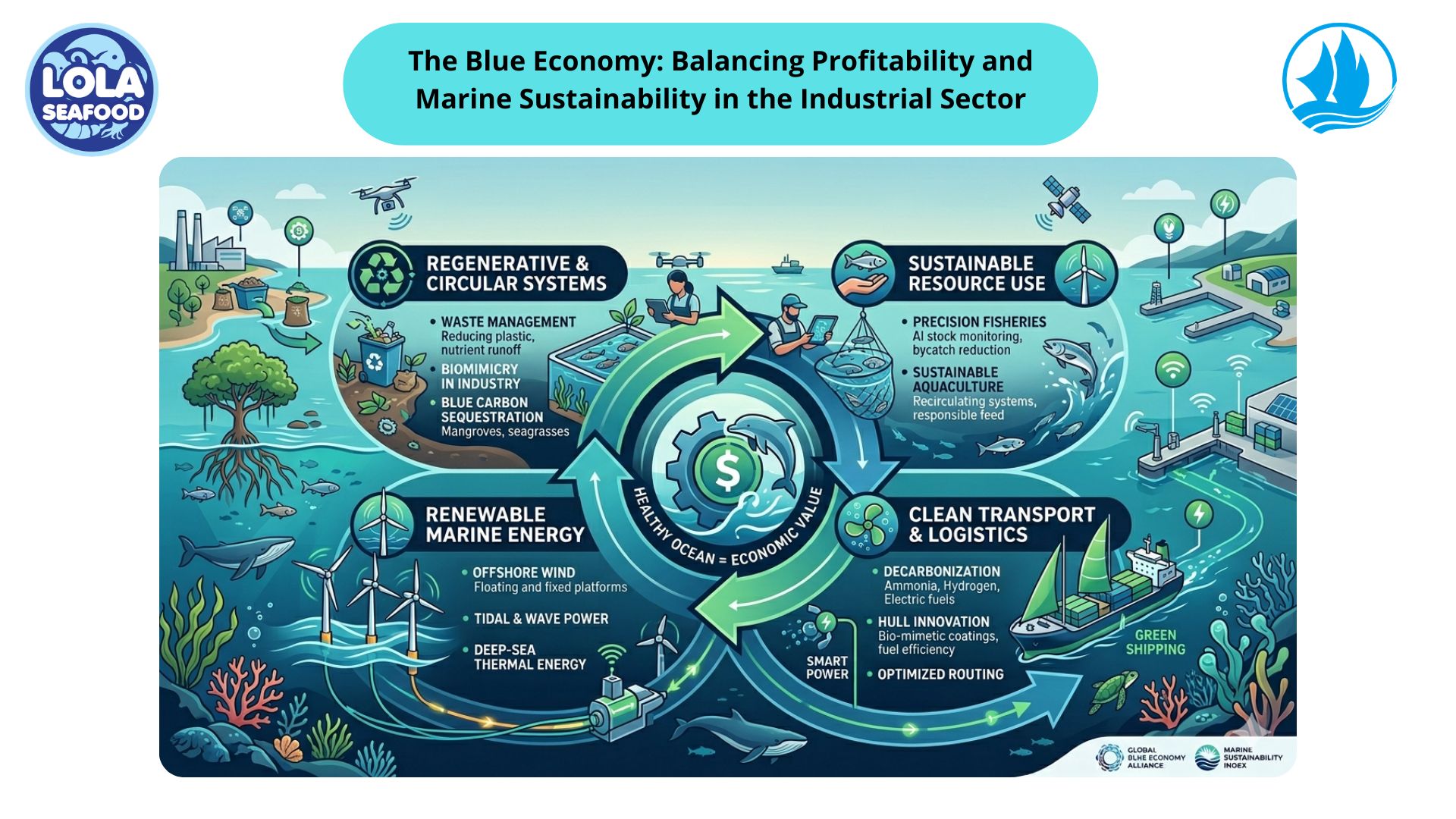
kelolalaut.com The ocean has always been a frontier of mystery and myth, but in the 21st century, it has become something far more tangible: the world’s next great economic engine. Covering over 70% of our planet, the ocean contributes roughly $1.5 trillion annually to the global economy. However, as industrial activities—from shipping to deep-sea mining—accelerate, the health of our marine ecosystems is hitting a breaking point.
The concept of the Blue Economy emerges as the essential framework for the future, challenging the outdated notion that we must choose between economic growth and environmental preservation. It posits that a healthy ocean is, in fact, the most valuable asset a business can have.
Understanding the Blue Economy
The "Blue Economy" is more than just "green growth" applied to the water. It refers to the sustainable use of ocean resources for economic growth, improved livelihoods, and jobs while preserving the health of ocean ecosystems. Unlike the traditional "Brown Economy," which relies on resource extraction and ignores environmental externalities, the Blue Economy seeks a circular approach.
In this model, profitability is inextricably linked to the regeneration of marine life. If the fish stocks disappear or the coral reefs die, the industries reliant on them—tourism, fisheries, and pharmaceuticals—collapse. Therefore, sustainability isn't just a moral choice; it is a financial imperative.
Key Industrial Pillars and the Shift to Sustainability
To understand how the industrial sector is evolving, we must look at the three primary pillars currently undergoing a "blue" transformation:
1. Sustainable Fisheries and Aquaculture
Global demand for protein is skyrocketing, and the ocean is the primary provider. However, overfishing has pushed many species to the brink of extinction. The Blue Economy promotes Precision Fishing—using AI and satellite data to track fish populations and prevent bycatch. Furthermore, the shift toward sustainable aquaculture (fish farming) reduces the pressure on wild stocks, provided it is managed without polluting surrounding waters with antibiotics or waste.
2. Green Shipping and Decarbonization
The shipping industry carries over 80% of global trade but is also a significant contributor to carbon emissions and noise pollution. The industrial transition here involves:
- Alternative Fuels: Moving from heavy fuel oil to hydrogen, ammonia, or electricity.
- Slow Steaming: Reducing speeds to save fuel and minimize impact on marine mammal communication.
- Hull Design: Using biomimetic coatings that prevent barnacle growth without releasing toxic chemicals.
3. Marine Renewable Energy
The ocean is a powerhouse of kinetic and thermal energy. Beyond offshore wind, which is already a multi-billion dollar industry, we are seeing the rise of Tidal and Wave Energy. These technologies provide a consistent, predictable power source that can decarbonize coastal grids, turning the ocean into a literal battery for the planet.
The Economic Case for Marine Conservation
Critics often argue that environmental regulations hamper industrial profits. However, data suggests the opposite. According to the High-Level Panel for a Sustainable Ocean Economy, every $1 invested in sustainable ocean interventions yields at least $5 in global benefits.
For instance, protecting mangroves and seagrasses doesn't just sequester carbon (Blue Carbon); it creates natural barriers against coastal erosion, saving billions in infrastructure damage from rising sea levels. For the industrial sector, this means lower insurance premiums and more resilient supply chains.
"We cannot have a healthy economy on a dying planet. The Blue Economy is the roadmap for how we harmonize human ambition with the biological limits of the sea."
Challenges and the Path Forward
Despite the potential, the transition faces significant hurdles. Illegal, Unreported, and Unregulated (IUU) fishing costs the global economy billions annually, while plastic pollution continues to degrade the quality of marine "raw materials."
To overcome these, we need a three-pronged strategy:
- Marine Spatial Planning (MSP): Governments must treat the ocean like a city, zoning specific areas for industrial use, conservation, and recreation to prevent conflict.
- Blue Finance: The rise of "Blue Bonds"—debt instruments issued to support ocean-friendly projects—is crucial for funding the high capital costs of new marine technology.
- Global Cooperation: Since the ocean has no borders, industrial standards must be international. A ship polluting in the Atlantic affects the food security of the Pacific.
If youre interested in our Whiting Fish Whole Round,Barramundi Fillet Skin On,Catfish Fillet Skinless,Cobia Fillet Skinless,Coral Trout Fillet Skin On,Barramundi Whole Round / Whole Gilled Gutted Scaled,Corvina / Croaker / Jew Fish Whole Round / Whole Gilled Gutted Scaled,Black Pomfret Whole Round,Red / Scarlet Snapper Fillet Portion,Parrotfish Fillet Skinless,Whiting Fish Whole Round please do not hesitate to contact us through email and/or Whatsapp
.jpg)