Ensuring Quality and Safety: The Vital Role of the WGGS Process in Fish Processing
By. Fajar - 10 Apr 2026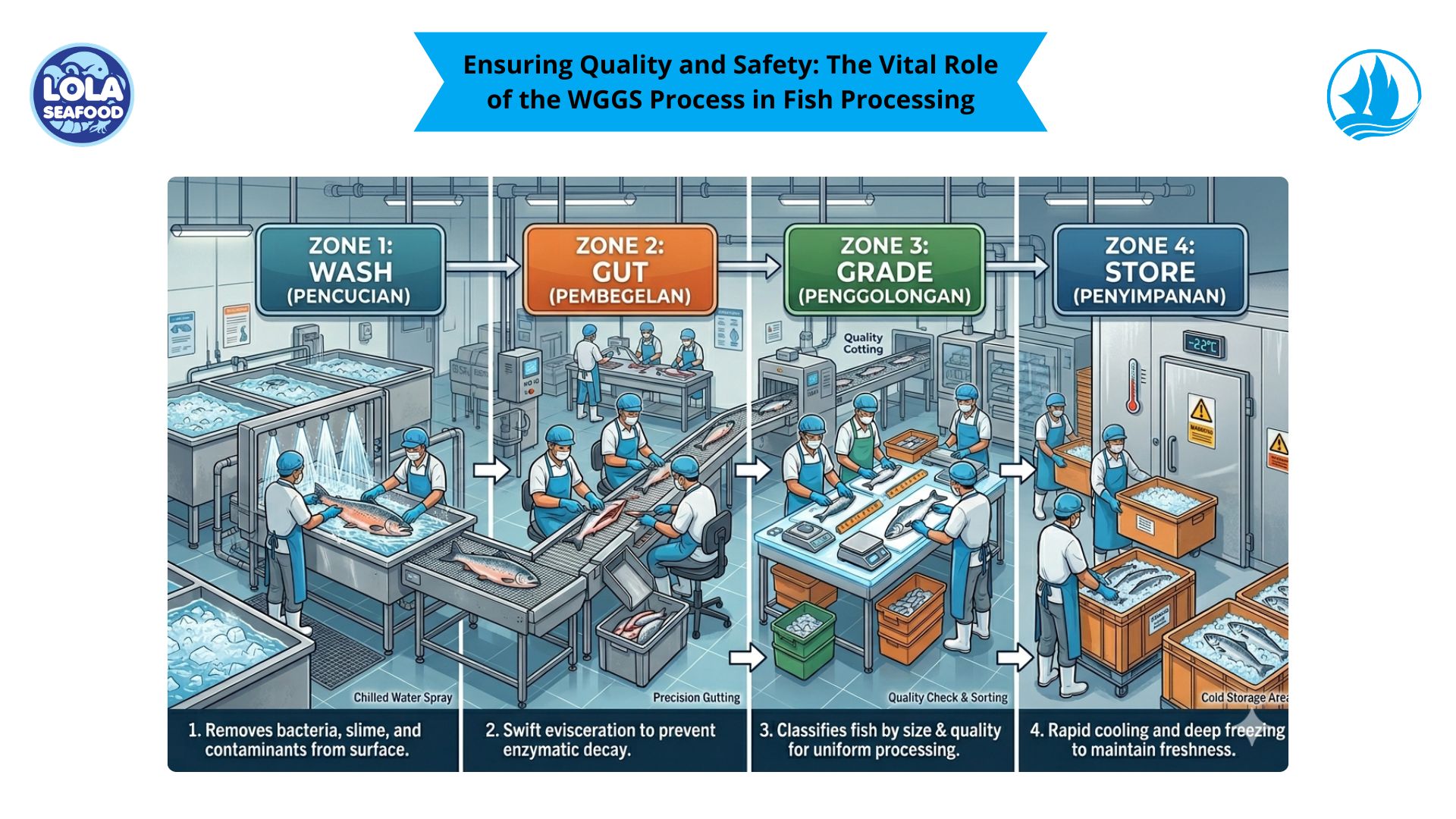
kelolalaut.com The global seafood industry is a cornerstone of international trade and food security. However, fish is one of the most perishable commodities on the planet. From the moment a fish is harvested, biological and chemical changes begin to degrade its quality. To combat this, the industry relies on rigorous processing standards. Among the most critical—yet often misunderstood—frameworks in modern fish processing is the WGGS (Wash, Gut, Grade, and Store) protocol. While it sounds fundamental, the meticulous execution of each stage in the WGGS process is the thin line between a premium product and a significant public health risk.
The Anatomy of the WGGS Process
To understand why paying attention to WGGS is non-negotiable, we must break down what happens at each stage of the processing line.
1. Washing: The First Line of Defense
The "Wash" phase is not merely about rinsing off mud or seaweed. It is a critical decontamination step. Fish are covered in natural slime that traps bacteria from the water. If not thoroughly cleaned using chilled, potable water or approved antimicrobial washes, these bacteria can be carried into the flesh during cutting. Neglecting this stage leads to "cross-contamination," where surface pathogens infect the edible portions of the fish.
2. Gutting: Removing the Biological Clock
The "Gut" phase is perhaps the most time-sensitive. The digestive tract of a fish contains enzymes and microorganisms designed to break down organic matter. Once the fish dies, these enzymes don't stop working; they begin to digest the fish’s own abdominal wall (a process known as belly burn). By ensuring precise and swift evisceration, processors stop internal decay and prevent the spread of visceral bacteria into the muscle tissue.
3. Grading: The Standard of Consistency
"Grading" involves sorting fish by size, species, and quality indicators (such as eye clarity and gill color). While often viewed as a commercial step to determine price, it is also a safety step. Uniform sizing ensures that subsequent processes—like flash-freezing or heat treatment—are applied evenly. If a batch of fish has inconsistent sizes, smaller fish might become freezer-burnt while larger ones remain under-processed, leading to bacterial survival.
4. Storage: Preserving the Cold Chain
The final "Store" phase is governed by the laws of thermodynamics. Fish must be kept at temperatures as close to 0°C (for fresh) or below -18°C (for frozen) as possible. Any fluctuation in storage temperature allows for the rapid multiplication of psychrophilic (cold-loving) bacteria.
Why Meticulous Attention is Mandatory
Public Health and Histamine Poisoning
One of the greatest risks in fish processing is the development of scombroid poisoning or histamine toxicity. In species like tuna and mackerel, improper handling during the WGGS stages allows bacteria to convert the amino acid histidine into histamine. Once histamine forms, it cannot be destroyed by cooking or freezing. Therefore, strict adherence to the "Wash" and "Store" components of WGGS is the only way to ensure consumer safety.
Economic Viability and Waste Reduction
From a business perspective, ignoring the WGGS process is a recipe for financial disaster. Post-harvest losses in the fisheries sector are alarmingly high, often reaching 25% of the total catch due to spoilage. By optimizing the WGGS flow, processors extend the shelf life of the product. High-quality grading also allows producers to access premium international markets, such as the EU or Japan, which have stringent import requirements regarding fish freshness and processing documentation.
Texture and Sensory Integrity
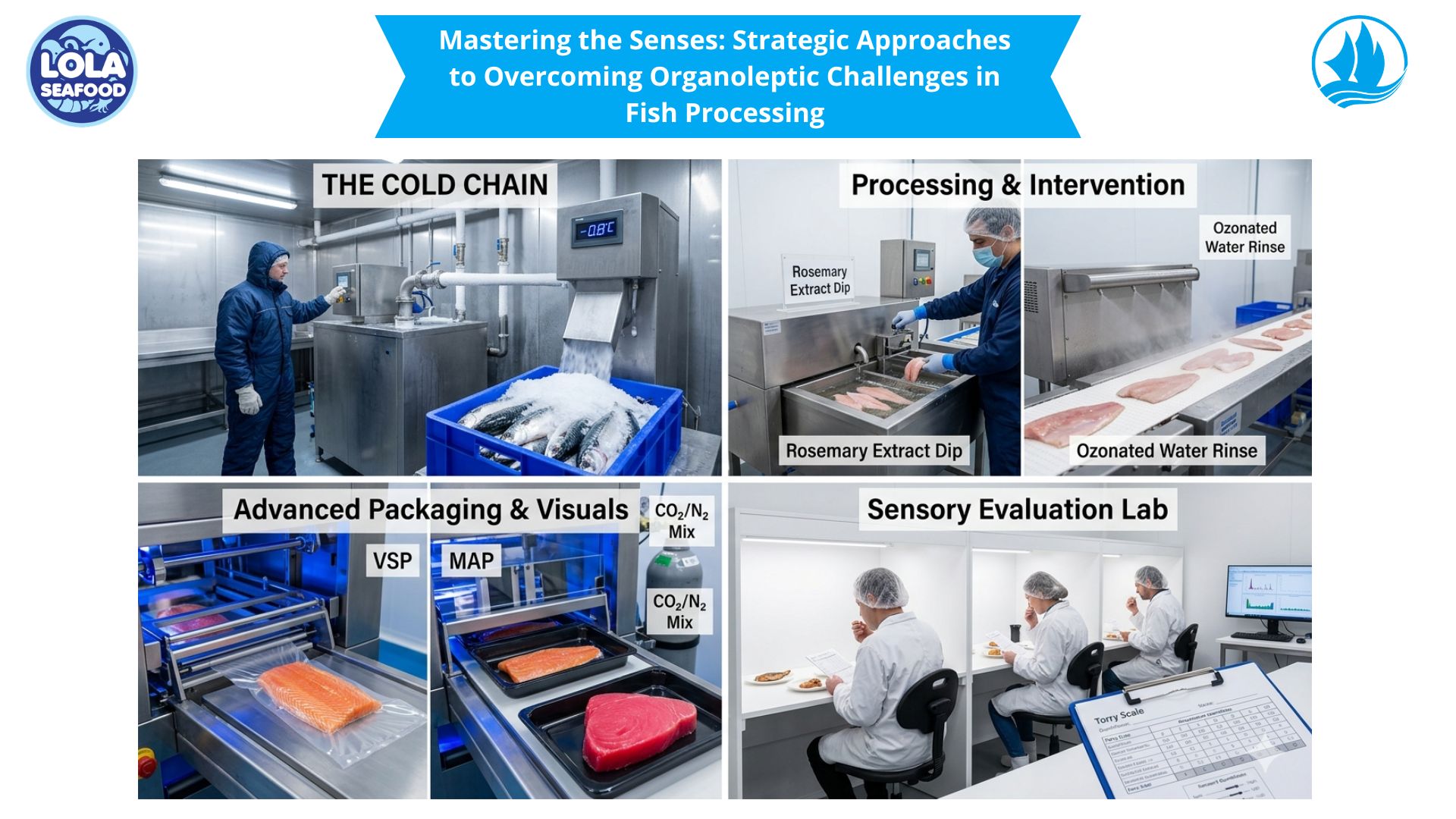
The culinary value of fish lies in its texture and delicate flavor. Improper washing or slow gutting leads to the breakdown of proteins and lipids. This results in "mushy" flesh and the development of "fishy" odors caused by the oxidation of fats and the production of Trimethylamine (TMA). For a consumer, the difference between a high-quality fillet and a poor one is determined entirely by how well the WGGS protocol was followed within the first few hours of harvest.
If youre interested in our Whiting Fish Whole Round,Barramundi Fillet Skin On,Catfish Fillet Skinless,Cobia Fillet Skinless,Coral Trout Fillet Skin On,Barramundi Whole Round / Whole Gilled Gutted Scaled,Corvina / Croaker / Jew Fish Whole Round / Whole Gilled Gutted Scaled,Black Pomfret Whole Round,Red / Scarlet Snapper Fillet Portion,Parrotfish Fillet Skinless please do not hesitate to contact us through email and/or Whatsapp

.jpg)