Sustainable Aquaculture: Transforming Fish Production Waste with Probiotic Bombs
By. Lutfi - 11 Feb 2026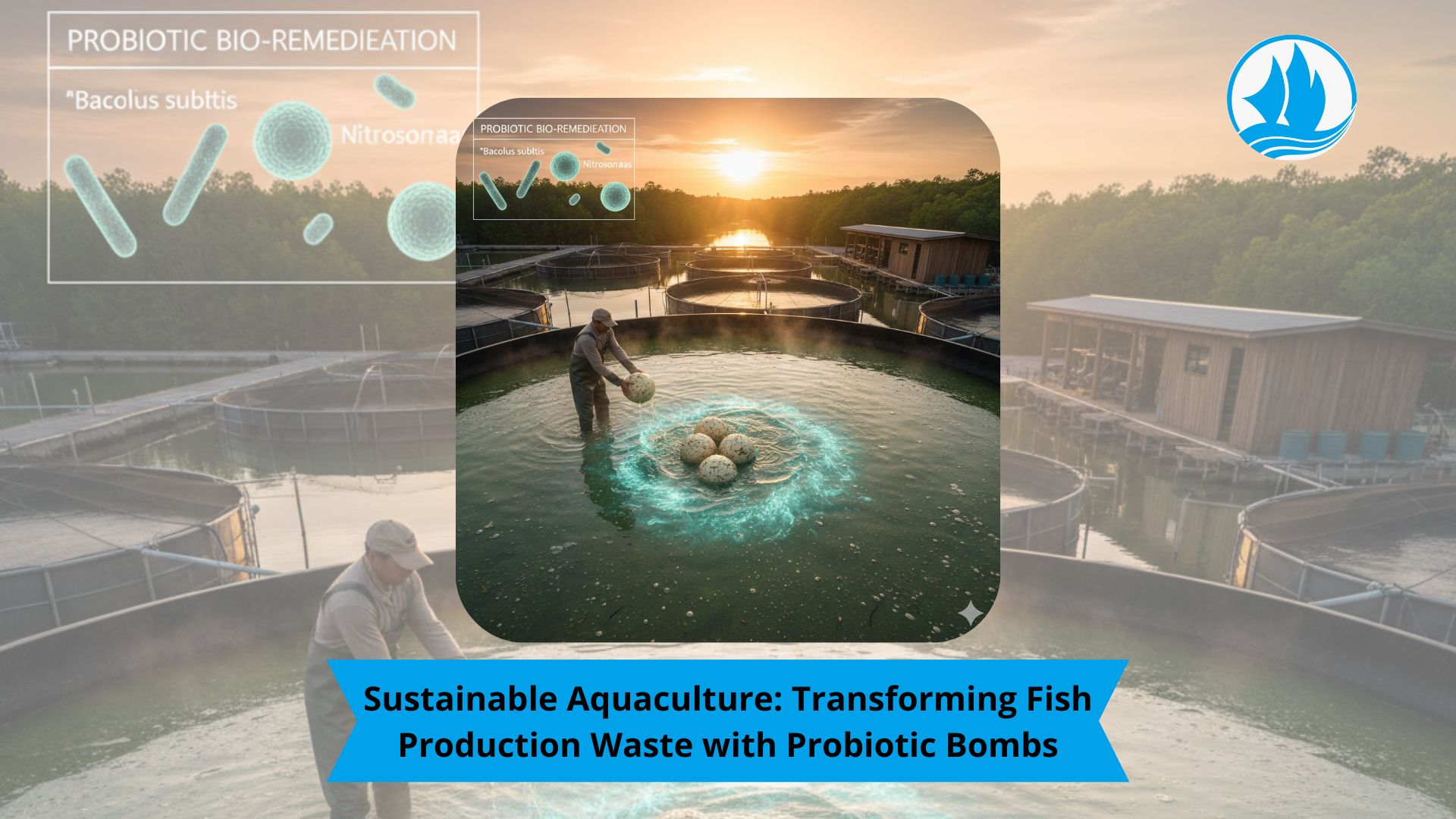
kelolalaut.com The global demand for seafood has pushed the aquaculture industry into a period of unprecedented growth. However, this "Blue Revolution" carries a significant environmental price tag. Fish processing and intensive farming generate massive volumes of wastewater loaded with organic matter, ammonia, and pathogenic bacteria. If left untreated, this effluent leads to eutrophication, oxygen depletion in natural water bodies, and the destruction of aquatic ecosystems.
Traditionally, wastewater treatment involves heavy machinery or expensive chemical interventions. However, a revolutionary, eco-friendly solution is gaining momentum: Probiotic Bombs. By leveraging the power of "good" bacteria, this method turns hazardous waste into a manageable, and even beneficial, resource.
Understanding the Waste Problem
Fish production waste is unique due to its high concentration of nitrogenous compounds. When fish are processed or raised in high densities, the water accumulates:
- Unconsumed Feed: Rich in proteins and lipids.
- Excreta: High in urea and ammonia.
- Scales and Mucus: Adding to the total suspended solids (TSS).
Without intervention, the decomposition of these materials by opportunistic bacteria consumes all dissolved oxygen, creating "dead zones" where no aquatic life can survive.
What is a Probiotic Bomb?
A "Probiotic Bomb" is not an explosive in the literal sense, but a highly concentrated, bio-encapsulated delivery system of beneficial microorganisms. Typically, these "bombs" consist of a core of dormant bacteria—such as Bacillus subtilis, Lactobacillus, and Nitrosomonas—mixed with a nutrient carrier (like rice bran or molasses) and a binding agent (like clay or calcium carbonate).
When dropped into wastewater, the outer shell dissolves, "detonating" a massive release of beneficial microbes into the environment. These bacteria are specifically selected for their ability to break down complex organic chains and neutralize toxins.
The Mechanism of Action
The effectiveness of probiotic bombs lies in their multi-phase approach to water purification:
1. Competitive Exclusion
By flooding the wastewater with billions of beneficial microbes, the "good" bacteria outcompete harmful pathogens like Vibrio or Salmonella for space and nutrients. This significantly reduces the biological load and the risk of disease spread.
2. Bioremediation and Organic Breakdown
Probiotics secrete powerful enzymes—proteases, lipases, and amylases—that act like chemical scissors. They snip large proteins and fats from fish waste into smaller, water-soluble molecules. This process drastically reduces Biological Oxygen Demand (BOD) and Chemical Oxygen Demand (COD).
3. Nitrification and Denitrification
Ammonia is the silent killer in fish waste. Probiotic bombs contain nitrifying bacteria that convert toxic ammonia (NH3) into nitrites (NO2) and then into relatively harmless nitrates (NO3) This prevents the "ammonia spike" that typically characterizes untreated fish effluent.
Advantages Over Traditional Methods
Why choose probiotic bombs over conventional filtration or chemical dosing?
|
Feature |
Chemical Treatment |
Probiotic Bombs |
|
Environmental Impact |
May leave toxic residues |
Entirely biodegradable |
|
Cost |
High energy/infrastructure costs |
Low-cost and scalable |
|
Simplicity |
Requires specialized labor |
"Drop and go" application |
|
Long-term Health |
Can be corrosive |
Improves the natural microbial balance |
Implementation in Fish Production
For a fish processing plant or a large-scale farm, the implementation of probiotic bombs is remarkably straightforward. The bombs can be strategically placed in settling ponds or aeration tanks.
The fermentation process used to create these bombs often involves local ingredients, making it a circular economy win. Farmers can ferment their own probiotic "dough," roll them into balls, and dry them. This empowers local producers to manage their waste without relying on expensive imported chemicals.
The Future of Waste Management
As environmental regulations tighten globally, the aquaculture industry must find ways to "green" its footprint. Probiotic bombs represent a shift from reactive waste management to proactive biological harmony. By treating wastewater not as a nuisance to be hidden, but as a biological medium to be balanced, we ensure the longevity of our oceans and the sustainability of our food systems.
The result is a cleaner discharge, healthier surrounding ecosystems, and a production cycle that respects the delicate balance of nature.
If youre interested in our Whiting Fish Whole Round,Barramundi Fillet Skin On,Catfish Fillet Skinless,Cobia Fillet Skinless,Coral Trout Fillet Skin On please do not hesitate to contact us through email and/or Whatsapp
.jpg)