From Deep Blue to Delivery: Maintaining Fish Quality for Industrial Processing
By. Sofie Thoriq - 24 Feb 2026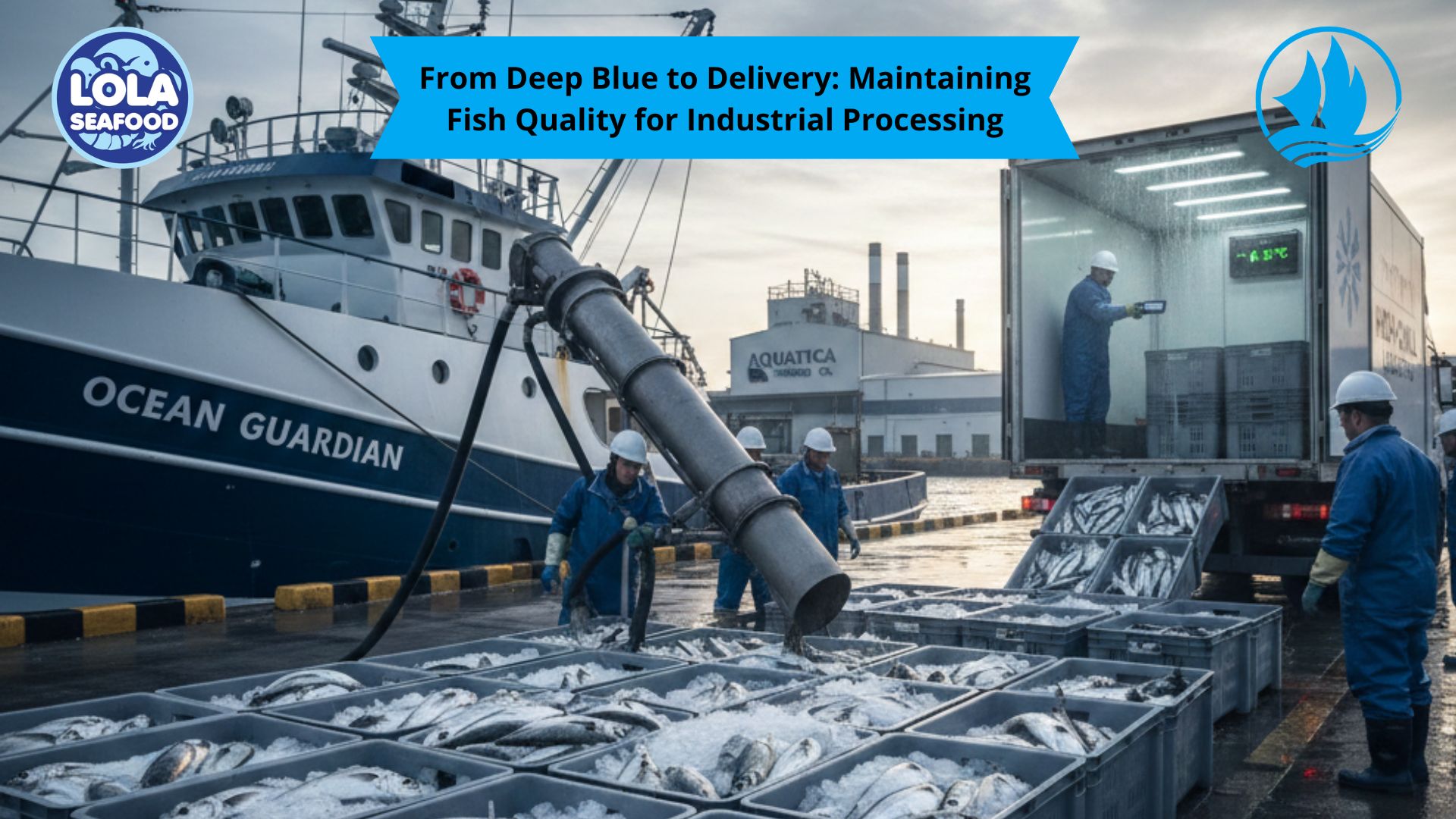
kelolalaut.com The journey of a fish from the moment it leaves the ocean until it reaches the industrial processing plant is a race against time and biology. Fish is one of the most perishable commodities on Earth; once harvested, its quality begins to degrade almost immediately due to enzymatic activity, bacterial growth, and oxidation. To ensure that the final product—whether it be frozen fillets, canned tuna, or high-end sashimi—meets safety and quality standards, a rigorous "cold chain" and meticulous handling process must be followed.
Here is an in-depth look at how the industry preserves the "ocean-fresh" quality of fish during transit.
1. Immediate Post-Harvest Handling
The preservation process begins the second the fish is pulled from the water. Stress management is the first, and often overlooked, step. When a fish struggles excessively during capture, it depletes its glycogen stores, leading to a rapid buildup of lactic acid. This lowers the pH of the muscle, resulting in a softer texture and shorter shelf life.
- Quick Bleeding (Ike Jime): For high-value species, techniques like Ike Jime or rapid bleeding are used. Removing the blood immediately prevents the spread of bacteria through the circulatory system and keeps the flesh white and clean.
- Rapid Chilling: The most critical factor is temperature. The goal is to bring the fish’s core temperature down to as close to 0°C as possible without freezing it.
2. The Science of Chilling: Ice and Slurry
Industrial fishing vessels utilize various chilling methods depending on the duration of the trip and the species of fish.
- Flake Ice: This is the traditional method. Fish are layered with flake ice in insulated holds. The ice must be clean and made from potable water to avoid contamination.
- Chilled Seawater (CSW): This involves a mixture of seawater and ice. It is highly effective because the liquid medium provides 100% surface contact with the fish, cooling it much faster than solid ice.
- Refrigerated Seawater (RSW): Common on larger industrial trawlers, RSW systems use mechanical refrigeration to chill seawater in large tanks. This allows for the bulk storage of massive catches while maintaining a precise, constant temperature.
3. Maintaining the Cold Chain During Transit
Once the vessel reaches the port, the "Cold Chain" enters its most vulnerable phase: unloading and land transport. Any "temperature abuse"—even for an hour—can significantly increase the bacterial load.
- Hygienic Unloading: Fish should be unloaded in shaded, cooled environments. Modern ports use vacuum pumps or conveyor systems to minimize physical bruising, which can lead to enzymatic spoilage.
- Insulated Transportation: For the journey to the processing plant, refrigerated trucks (reefers) are mandatory. These vehicles are equipped with sensors to monitor temperature fluctuations in real-time. The industry standard is to maintain a "high-chill" environment (between 0°C and 4°C).
4. Preventing Physical and Chemical Spoilage
Beyond temperature, physical integrity and chemical stability are paramount.
- Pressure Management: In storage holds, fish at the bottom can be crushed by the weight of those above. Proper shelving and the use of shallow crates prevent physical damage to the delicate muscle fibers.
- Oxidation Control: Fatty fish like mackerel or salmon are prone to "rancidity" when exposed to oxygen. Glazing (applying a thin layer of ice) or vacuum packaging during the transport phase can help mitigate this.
5. Compliance and Traceability
In 2026, technology plays a massive role in preservation. Sensors and "Smart Tags" are often attached to batches of fish. These devices record the temperature history throughout the journey. If the temperature exceeds a certain threshold, the processing plant is alerted, and the batch may be downgraded or rejected to ensure consumer safety.
Key Takeaway: The quality of a processed fish product is never better than the quality of the raw material at the time of arrival. Preservation is not about "improving" the fish, but about "pausing" the natural decay.
If youre interested in our Whiting Fish Whole Round,Barramundi Fillet Skin On,Catfish Fillet Skinless,Cobia Fillet Skinless,Coral Trout Fillet Skin On,Barramundi Whole Round / Whole Gilled Gutted Scaled,Corvina / Croaker / Jew Fish Whole Round / Whole Gilled Gutted Scaled,Black Pomfret Whole Round,Red / Scarlet Snapper Fillet Portion,Parrotfish Fillet Skinless,Baby Octopus Flower please do not hesitate to contact us through email and/or Whatsapp