Implementing a Correct HACCP Plan for Vacuum Packaging in the Fish Processing Industry
By. Nugroho Luhur - 26 May 2026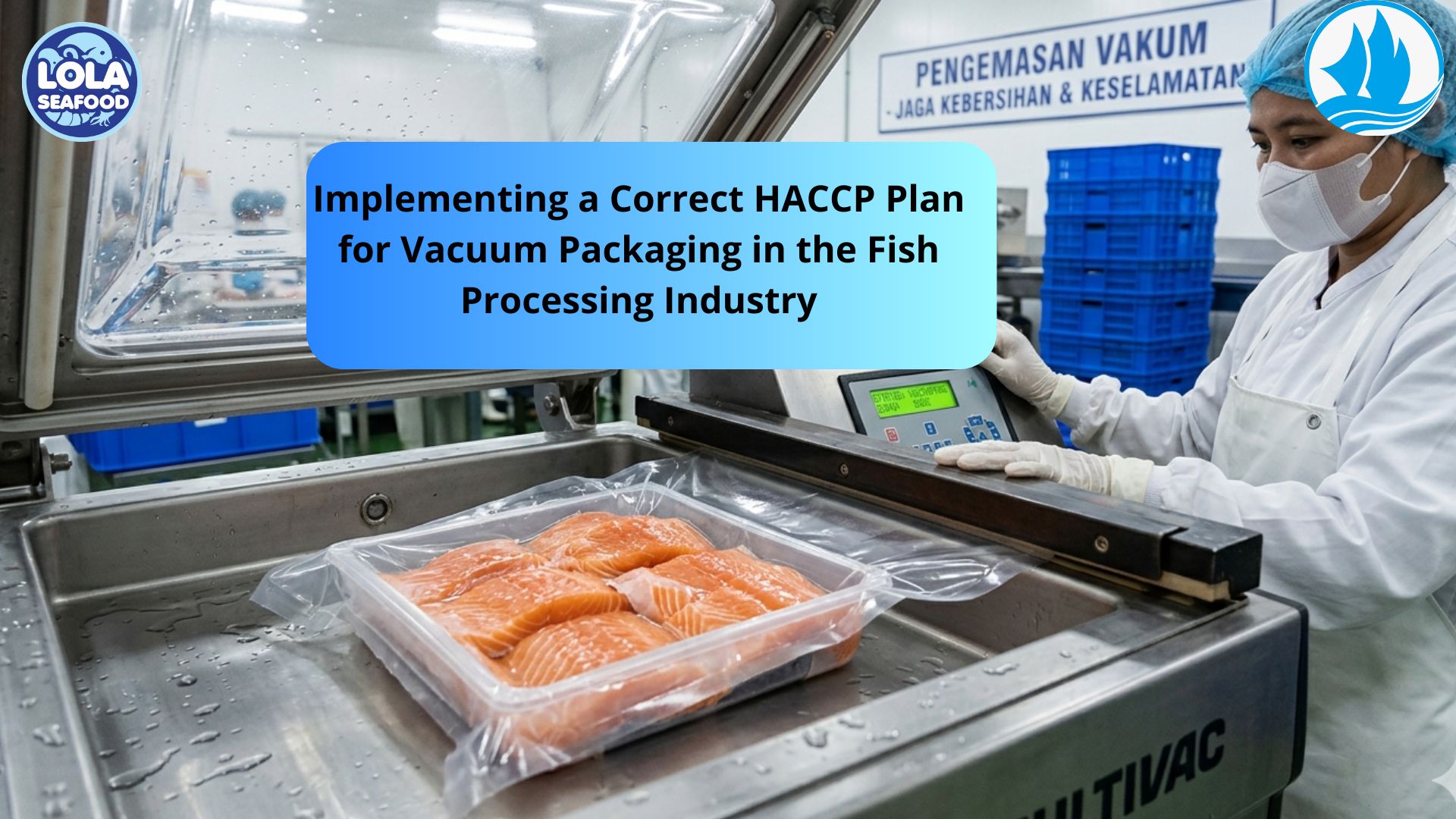
kelolalaut.com The seafood processing industry operates in a high-stakes environment where product freshness directly correlates with consumer safety. Among various preservation methods, vacuum packaging has emerged as a gold standard. By removing oxygen from the packaging, this method delays oxidative rancidity, prevents freezer burn, and inhibits the growth of aerobic spoilage bacteria.
However, vacuum packaging creates an anaerobic (oxygen-free) environment. While this extends shelf life, it also introduces a severe biological hazard: the growth of Clostridium botulinum, particularly non-proteolytic Type E, which can grow at temperatures as low as 3.3oC and produce deadly neurotoxins without altering the fish's odor or appearance.
To mitigate this risk, fish processing plants must implement a rigorous Hazard Analysis Critical Control Point (HACCP) plan specifically tailored to the vacuum packaging process.
1. Hazard Analysis: Identifying the Silent Threats
The first step in a correct HACCP plan is conducting a thorough hazard analysis at the packaging stage.
- Biological Hazards: The primary concern is Clostridium botulinum types B, E, and F. Other anaerobic or facultative anaerobic pathogens like Listeria monocytogenes also pose significant risks if cross-contamination occurs before sealing.
- Physical Hazards: Foreign materials such as plastic fragments, bone splinters, or metal shards from processing machinery getting trapped inside the vacuum pouch.
- Chemical Hazards: Migration of unauthorized chemical compounds from non-food-grade packaging films into the fish flesh.
2. Determining Critical Control Points (CCPs)
In a standard fish processing line, the Vacuum Sealing and Post-Packaging Storage stages are almost always designated as Critical Control Points (CCPs).
Because vacuum packaging creates the hazard environment, the controls applied immediately during and after this step are critical to ensuring safety.
3. Establishing Critical Limits (CL)
Critical limits must be scientifically validated, measurable, and strictly enforced. For vacuum-packed fish, the critical limits generally focus on two parameters: seal integrity and temperature.
|
Process Step |
Potential Hazard |
Critical Limit (CL) |
|
Vacuum Sealing |
Pathogen survival due to improper seal |
100% continuous, airtight seal with no wrinkles, moisture, or product trapping in the seal area. |
|
Chilled Storage |
C. botulinum toxin formation |
Product temperature must be maintained strictly at 3.0oC (37.4oF) throughout storage and distribution. |
|
Frozen Storage |
Pathogen growth |
Product must be kept continuously frozen at $\le -18oC (0oF) |
Important Note: If chilling alone (3oC) cannot be guaranteed during distribution, the fish must be frozen, or alternative barriers (hurdles) like a minimum salt content of 3.5% water-phase salt (WPS) or a strictly controlled pH must be utilized.
4. Monitoring Procedures
Monitoring ensures that the critical limits are never breached.
- Visual Inspection: Operators must visually check the seal integrity of the pouches at regular intervals (e.g., every 30 minutes) or utilize automated vision systems to detect leaks, wrinkles, or incomplete seals.
- Destructive Testing: Bubble emission tests or burst tests should be performed on sample packages daily.
- Temperature Logging: Continuous electronic data loggers must monitor the cold storage rooms where the vacuum-packed fish is kept.
5. Corrective Actions
When a deviation from the critical limits occurs, immediate corrective actions must be taken:
- Isolate the Product: Hold all vacuum-packed fish produced since the last acceptable monitoring check.
- Evaluate and Repack: If a sealing machine malfunctions, affected products must be stripped of their packaging, evaluated for spoilage, and re-vacuumed using a calibrated machine, or diverted to a non-vacuum format.
- Adjust Temperature: If a cooler rises above 3.0oC move the product immediately to a functioning blast freezer or chiller, and repair the refrigeration system.
6. Verification and Record-Keeping
Verification proves that the HACCP plan is working effectively. This includes calibrating thermometers and pressure gauges on the vacuum packaging machines regularly. Furthermore, microbiological testing of the finished product for Listeria and shelf-life validation studies are vital components of verification.
Accurate record-keeping provides the legal and operational proof of safety. Every log regarding seal checks, storage temperatures, and corrective actions must be signed, dated, and archived for a period exceeding the product's shelf life.
If youre interested in our Whiting Fish Whole Round,Barramundi Fillet Skin On,Catfish Fillet Skinless,Cobia Fillet Skinless,Coral Trout Fillet Skin On,Barramundi Whole Round / Whole Gilled Gutted Scaled,Corvina / Croaker / Jew Fish Whole Round / Whole Gilled Gutted Scaled,Black Pomfret Whole Round,Red / Scarlet Snapper Fillet Portion,Parrotfish Fillet Skinless,Baby Octopus Flower,Bonito Fillet Portion Cut,Catfish Fillet Skinless,Coral Trout Fillet Skinless,Baby Octopus Flower Baby Octopus Whole Cleaned Baby Octopus Whole Round Barramundi Fillet Portion Cut Black Pomfret Portion Cut Bonito Whole Round Catfish Steak Catfish Fillet Skinless Catfish Steak Baby Octopus Whole Cleaned Catfish Fillet Skinless Barramundi Fillet Skinless Black Pomfret Portion Cut Bonito Whole Round please do not hesitate to contact us through email and/or Whatsappp


.jpg)
.jpg)
.jpg)
.jpg)